Supporting partnership, excellence and equity in cervical screening
The role of Ireland’s CervicalCheck Screening Training Unit
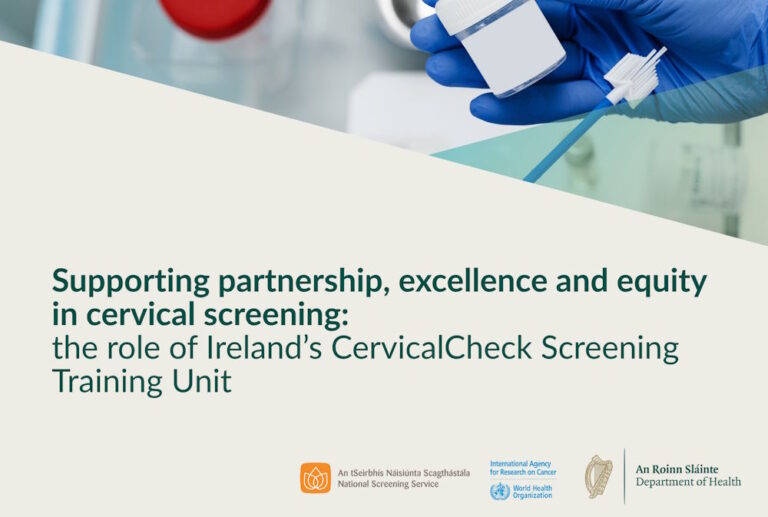
The role of Ireland’s CervicalCheck Screening Training Unit
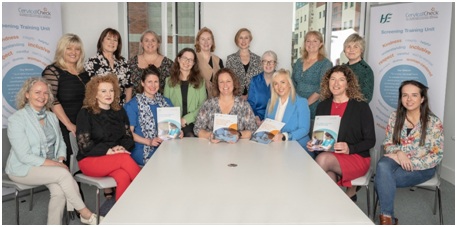
CervicalCheck’s Screening Training Unit (STU) is a cornerstone of Ireland’s national cervical screening programme. By providing education, training and support to healthcare professionals – from novice to experienced sample takers – the STU is strengthening the quality and reach of screening, addressing inequalities and improving equity.
About CervicalCheck
CervicalCheck is Ireland’s free national HPV cervical screening programme and is part of the HSE’s National Screening Service. It’s for women and people with a cervix aged 25 to 65 who do not have symptoms of cervical cancer.
CervicalCheck Charter
CervicalCheck is delivered within the framework of a CervicalCheck Charter. We work with partners across the cervical screening pathway – primary care services, colposcopy, histology laboratories and our two screening laboratories.
We offer a complete onward service to women who need it. This includes diagnosis and treatment. We invite women aged 25 to 29 for screening every 3 years, and every 5 years for those aged 30 to 65. Women book their own appointment with one of over 4,000 GPs and clinics registered with CervicalCheck to provide cervical screening.
A cornerstone of a quality screening programme
Since its establishment in 2008, our award-winning CervicalCheck’s Screening Training Unit (STU) has played a central role in developing, coordinating, delivering and evaluating education for healthcare professionals who provide cervical screening – from GPs and practice nurses to midwives and specialist clinicians.
Our work ensures that those taking cervical screening samples have the knowledge, skills and confidence to deliver safe, effective and person-centred care. We also provide continuing professional development opportunities.
Strong academic partnerships
We’ve worked closely with academic and professional partners to strengthen cervical screening education. We work with four Higher Education Institutions to deliver accredited training and support – the University of Galway, University College Cork, the Royal College of Surgeons in Ireland and the Irish College of General Practitioners.
We have embedded cervical screening education within GP Specialist Training Schemes, ensuring that future GPs enter practice with a strong foundation in screening. Collaboration with partners remains central to how we develop and deliver education and ensures it meets the needs of those working in diverse healthcare settings.
A strategic approach to advancing education
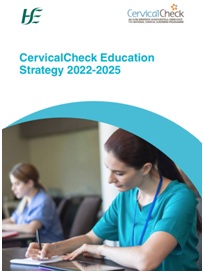
We developed an Education Strategy (2022–2025) to support access to education. It sets out clear priorities for strengthening cervical screening education.
A major step forward was the development of a free national Cervical Screening Education Programme. This ensures that every healthcare professional involved in cervical screening can build the skills they need.
Education that supports professional development
We offer educational opportunities tailored to professionals at different stages of their careers. These include:
- novice training programmes for new sample takers
- continuing professional development through a suite of online clinical updates and recorded webinars
- lunch and learn webinars focused on emerging topics
- targeted training interventions in response to identified quality issues.
Shaping education guided by experts
We develop and publish educational resources including clinical guidance notes, protocols and practical educational tools. These resources support practitioners in delivering consistent, high-quality care. This work is supported by an Education Advisory Group.
This group brings together a broad mix of expertise to guide and strengthen cervical screening education. Together, we ensure our education programmes and resources are evidence-based, clinically robust, relevant to practice, and aligned with the needs of both healthcare professionals and women who are eligible for screening.
A recent example includes our work with Ireland’s National Women and Infants Health Programme to develop guidance for GPs on how to manage women with symptoms. This clinical guidance and targeted education helps primary care teams understand when symptoms need investigation and how to ensure women receive timely referral and care – even if they are not due for screening. This complements the screening programme and helps ensure that women with symptoms access the appropriate care.
Education to support equity in screening
We work to make screening more accessible by extending education and support beyond traditional primary care settings.
We have strengthened collaboration and engagement with women’s health services across Ireland’s national health service, the Health Service Executive, ensuring cervical screening is part of the conversation at every opportunity. We have embedded cervical screening practice in ambulatory gynaecology clinics, genito-urinary clinics and Sexual Assault Treatment Units – where speculum examinations are often part of their care. This creates new opportunities for women to be screened in a familiar and supportive setting.
In recent years, we have embedded trauma-informed cervical screening into our education. We tailor our education approaches to support services such as those that care for women who are homeless, migrant women, and refugees. This collaborative approach has improved access to cervical screening by addressing barriers related to language, culture, education and service availability.
Case Study: Supporting trauma-informed cervical screening for women in prison
A nurse-led initiative in Limerick Female Prison is enabling more women to access cervical screening. It includes a peer-to-peer education programme and a trauma-informed, female-led health clinic.
Studies show women in prison are diagnosed with cervical cancer at rates four to five times higher than women in the general community. Despite national reductions in cervical cancer rates due to organised screening, we know from research that women in prison typically receive later diagnoses with poorer outcomes. Recognising this gap, the prison implemented a new trauma-informed, on-site screening model in 2023. This was supported by the establishment of a dedicated medical facility and the recruitment of a female GP. The initiative reflects Limerick Female Prison’s commitment to equitable healthcare, rehabilitation, and trauma-informed care.
Our CervicalCheck STU provided formal accreditation to participating nurses, and Rape Crisis Centre counsellors offer trauma support.
Cervical Cancer Elimination
Our initiatives align with Ireland’s Cervical Cancer Elimination Action Plan 2025-2030 and our Strategic Framework to improve equity in screening 2023-2027. They show how education can drive practical action to reduce inequalities and bring screening to people who might otherwise be left behind.
As European countries work towards the shared goal of eliminating cervical cancer, the Irish experience shows how a dedicated training unit can underpin success – and how education can be a powerful lever for quality, equity and better outcomes for women who choose screening.
Further reading:
- A trauma-informed approach to cervical screening in Donegal SATU supports women to choose screening
- 5 years of HPV cervical screening in Ireland: Providing better outcomes for women who choose screening
- Smoking and HPV – supporting patients and colposcopy staff to understand the links between HPV and cervical cancer
- CervicalCheck Programme Reports
- For more information about the CervicalCheck Screening Training Unit, email:
Subscribe to our newsletter to get news and updates.







This project has received funding from the European Union’s EU4HEALTH Programme under the Grant Agreement no 101162959