Home » Campaign Country » Ireland takes action to improve access to cancer screening for disabled people
Ireland takes action to improve access to cancer screening for disabled people
Breast, cervical and bowel screening more accessible for disabled people
HSE National Screening Service
Ireland’s HSE National Screening Service is taking action to make breast, cervical and bowel screening more accessible for disabled people. Grounded in research with disabled people, Ireland is implementing practical changes – from staff training to new resources for carers – to break down barriers and improve equity.
Listening to the lived experience
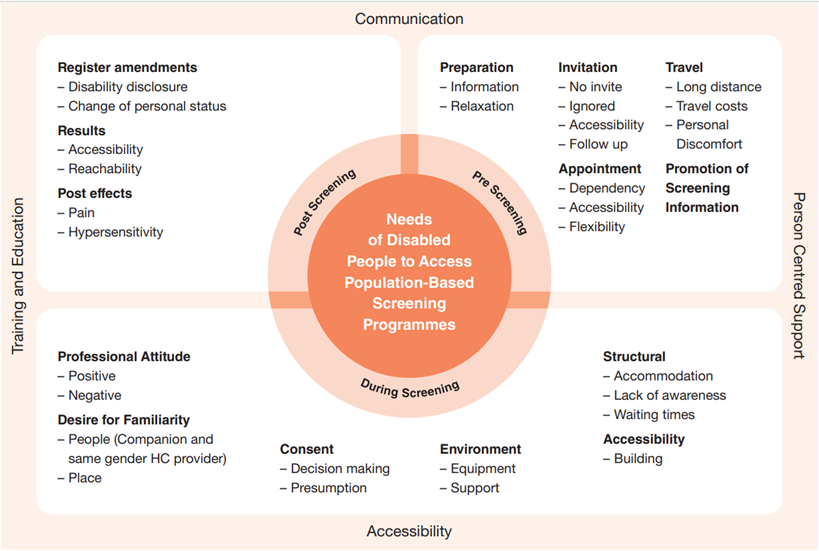
We know that disabled people experience barriers that can make it harder to access cancer screening. These barriers are often practical – such as transport or physical access – and they can also relate to communication or understanding of screening.
To better understand these challenges, Ireland’s HSE National Screening Service carried out a national Disability Needs Assessment. It’s the first study of its type to be carried out in Ireland. We worked with researchers from Dublin City University’s School of Nursing, Psychotherapy and Community Health to complete the study. We worked in partnership with disabled people and representative organisations. The research gathered the lived experiences of accessing breast, cervical and bowel screening.
It highlighted many areas where we can do better, including:
- making information clearer and easier to understand
- offering more flexible appointment options
- building staff confidence and awareness
- supporting carers to help people attend screening.
This research has shaped a programme of work to reduce barriers and make screening more accessible and inclusive for all.
From research to action
We are acting on what people told us. We are now implementing practical changes across our cancer screening programmes based on the findings of the disability needs assessment.
A key part of this work is disability awareness training for our staff. We’ve been working closely with disability inclusion experts to develop and deliver the training which is tailored specifically for our staff working across our screening programmes.
The training helps staff to:
- understand the barriers disabled people face
- communicate more effectively
- make adjustments to support individual needs.
It is an essential step in building and improving screening programmes that welcome everyone.
Supporting carers
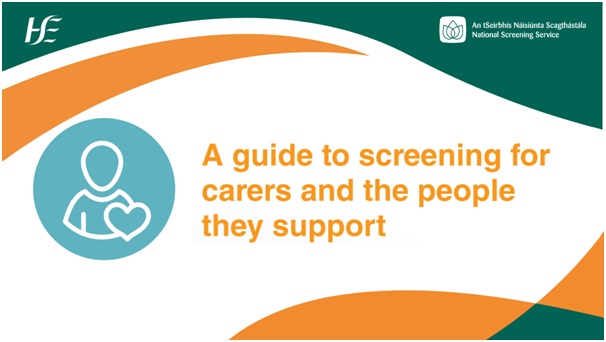
Carers play an important role in supporting disabled people to access healthcare, including screening. We developed a carers’ guide to screening to support carers. It’s a practical resource that explains what screening is, how it works, and how carers can help the person they support to attend screening.
A strategic commitment
Ireland’s work to improve access to cancer screening for disabled people is part of our broader commitment to embedding equity in everything we do. It’s one of our government’s commitments in the National Human Rights Strategy for Disabled People (2025-2030) to ensure that disabled people are made aware of the supports available to them in accessing our national screening programmes. It also reflects the core aims of Europe’s Beating Cancer Plan and the EUCanScreen project – to make cancer screening more accessible and more equitable.
By listening to people with disabilities, acting on what we learn and sharing our approaches, Ireland is working to make sure that disabled people are not left behind in cancer prevention and early detection.
Ireland has 5 priority areas for Improving equity in screening. Priority Area 4 is about accessibility and inclusivity and we are applying learning from this to Task 6.3 (individual barriers) and Task 6.5 (improved cancer screening for people with intellectual disabilities) of the EUCanScreen project.
- Find out more about our work to improve equity in screening: hse.ie/equityinscreening
- Follow the HSE National Screening Service on X @NSShse, on LinkedIn and follow the hashtag #ChooseScreening
- The National Screening Service is part of Ireland’s Health Service Executive (HSE). Keep up to date with our latest news at screeningservice.ie
Subscribe to our newsletter to get news and updates.







This project has received funding from the European Union’s EU4HEALTH Programme under the Grant Agreement no 101162959