Home » Campaign Country » Storytelling and screening Ireland’s inclusive work with Traveller communities to make cancer screening more accessible
Storytelling and screening Ireland’s inclusive work with Traveller communities to make cancer screening more accessible
Improving knowledge and awareness about cancer prevention and cancer screening
HSE National Screening Service
In Ireland, the HSE National Screening Service and National Cancer Control Programme worked with Pavee Point Traveller and Roma Centre to improve knowledge and awareness about cancer prevention and cancer screening programmes among the Traveller population.
Travellers tell the story of the project through their eyes
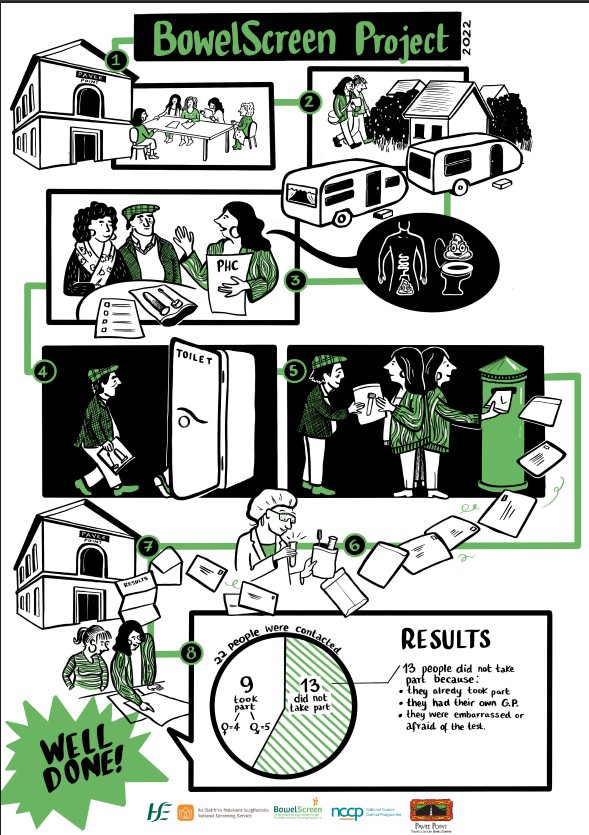
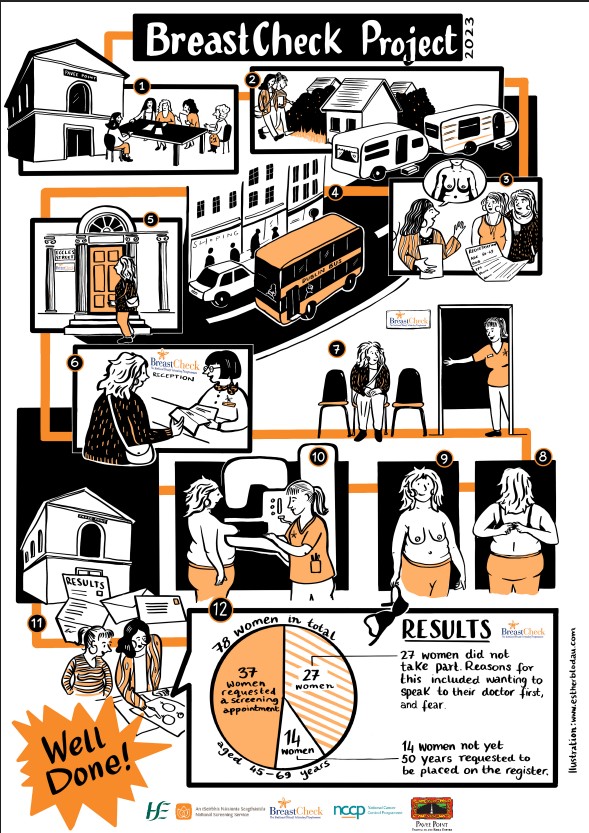
These infographics were co-designed with Traveller Primary Health Care Workers (PHCWs). They tell the story of the project process, challenges and results, in picture form. The culturally appropriate imagery reflects Traveller accommodations and everyday life, which can be shared within Traveller communities.
There is one infographic for each of Ireland’s cancer screening programmes – BowelScreen, BreastCheck and CervicalCheck.
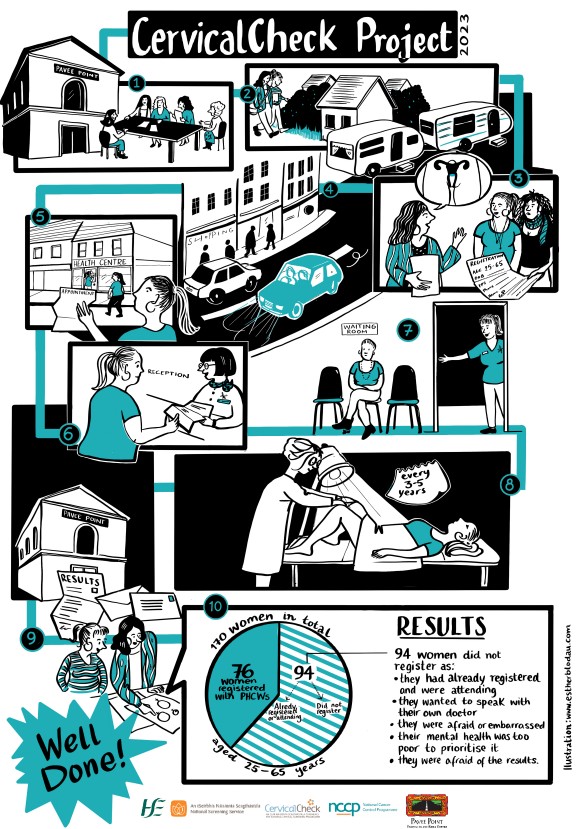
How we worked with the Traveller community
- We provided education sessions for Traveller PHCWs. These sessions were co-designed and materials used were adapted to make them culturally appropriate for the Traveller community.
- Traveller PHCWs then carried out fieldwork in their communities. They provided support, information and resources to people about how to prevent cancer, and about screening and early detection.
- We held focus groups with the Traveller PHCWs to learn about their fieldwork, how they delivered information and the barriers they came across.
- We worked with the Traveller PHCWs to address barriers such as literacy issues and postal difficulties, supporting people to register for screening, make appointments and attend screening.
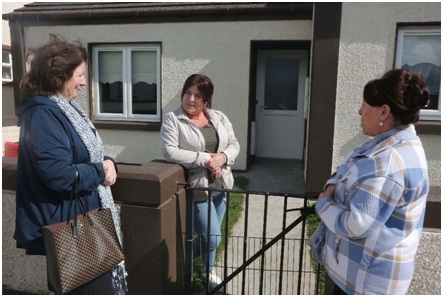
What we learned and achieved together
- The trusted relationships between the Traveller community and Traveller PHCWs were crucial. Outreach and education were accepted because they came from within the community.
- As a direct result, people from Traveller communities engaged with all three screening programmes – registering, making appointments, and attending screening.
- The partnership approach fostered respect, inclusion and a sense of ownership. Women in particular reported feeling seen and respected through this process.
Why this project matters
Traveller communities in Ireland face significant health inequities: poorer outcomes, earlier mortality, and a legacy of discrimination and mistrust in healthcare. We know that disadvantaged groups are often diagnosed with cancer at later stages. Taking part in screening is a key route to early detection.
To improve equity in screening, we need outreach approaches that are culturally respectful, accessible and trusted. That’s what this project set out to do.
By harnessing storytelling traditions and trusted relationships, this project shows how equity can be advanced through collaboration, creativity and shared ownership.
In her blog, Co-ordinator of the Pavee Point Traveller Primary Health Care Project, Mary Brigid Collins, tells us about the project in more detail.
Priority Area 2 relates to education, training and development and Priority Area 4 is about accessibility and inclusivity. We are applying learning from these and our Traveller Primary Health Care Workers to Work Package 6 (addressing barriers and facilitators in cancer screening) of the EUCanScreen project.
Find out more about our work to improve equity in screening: hse.ie/equityinscreening
- Follow the HSE National Screening Service on X @NSShse, on LinkedIn and follow the hashtag #ChooseScreening
- The National Screening Service is part of Ireland’s Health Service Executive (HSE). Keep up to date with our latest news at screeningservice.ie
Subscribe to our newsletter to get news and updates.






This project has received funding from the European Union’s EU4HEALTH Programme under the Grant Agreement no 101162959