When Dr. Lela Bakradze began her career as a physician in Georgia more than 40 years ago, there was no vaccine to protect against high-risk strains of human papillomavirus (HPV) — a virus now recognised as the primary cause of cervical cancer and a contributing factor in several other malignancies. Today, she reflects on that transformation with a sense of wonder.
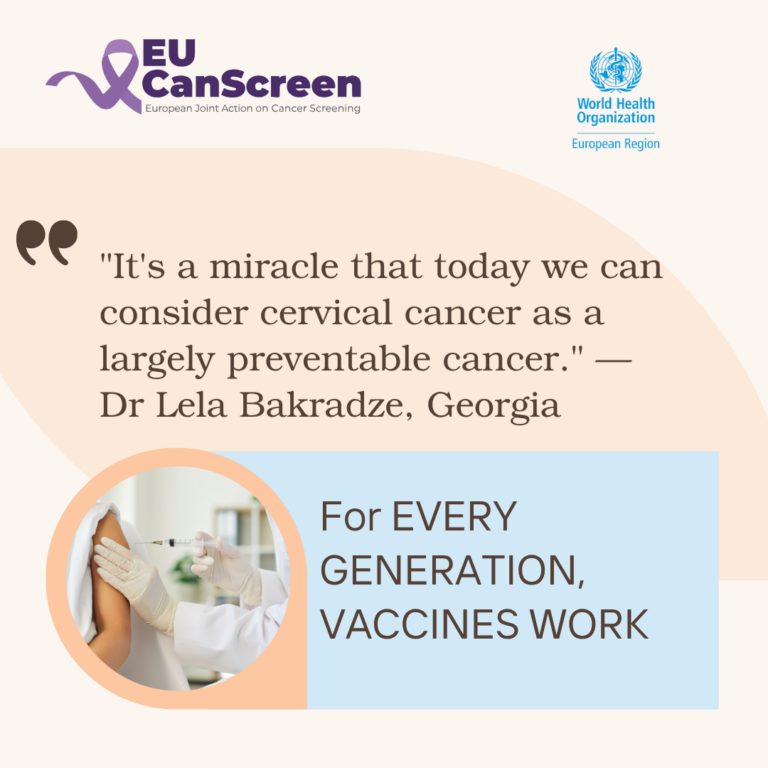
"HPV vaccination didn't exist when I started my medical career back in the early 80s. It's a miracle that today we can consider cervical cancer as a largely preventable cancer."
— Dr. Lela Bakradze, Georgian public health expertOver a distinguished career spanning the International Federation of Red Cross and Red Crescent Societies, the Georgian Red Cross Society, and the United Nations Population Fund, Dr. Bakradze has witnessed vaccination evolve from a tool focused almost exclusively on childhood infectious diseases into one with far broader implications for lifelong health.
Key Facts
- HPV is the leading cause of cervical cancer worldwide, responsible for the vast majority of cases.
- HPV vaccination is included in Georgia's national immunization calendar for both adolescent girls and boys.
- In Georgia, HPV vaccination uptake was below 30% for both sexes in 2024.
- Countries with high HPV vaccination coverage have seen marked reductions in HPV infection, precancerous lesions, and cervical cancer rates.
- A WHO/Europe-supported behavioural study in Georgia (2023) identified key barriers to vaccination uptake, including healthcare worker hesitancy and caregiver misconceptions.
HPV Vaccination: Benefits Beyond Young People
Dr. Bakradze's current focus is on social rights and healthcare access for older populations in Georgia — yet she remains a vocal advocate for vaccination across all age groups. She points to a growing body of evidence showing that vaccines do not merely prevent infectious diseases: they can also reduce the burden of certain noncommunicable diseases (NCDs), including some cancers and cardiovascular conditions, and emerging research even suggests links to reduced dementia risk.
"Vaccines have been evolving during the last decade, and now also make a huge difference to the lives of older adults," she explains. "This information must be provided to populations, to target the groups who can benefit from this triumph of science."
Within Georgia's national immunization calendar, hepatitis B vaccination for infants plays a direct role in preventing chronic hepatitis B infection — a major driver of liver cancer. Similarly, HPV vaccination in adolescence is producing measurable reductions in precancerous cervical lesions in countries where uptake is consistently high.
Dr. Bakradze is particularly keen to see barriers removed for older or frail individuals who may struggle to access vaccination services, and calls for greater investment in training health professionals to counsel patients across all age groups — not just children and adolescents.
Tackling Vaccine Hesitancy and Misinformation
Despite the proven safety and efficacy of HPV vaccines, uptake in Georgia remains concerningly low. According to WHO data, vaccination coverage was below 30% for both girls and boys in 2024 — with significant variation across regions. Dr. Bakradze attributes this not primarily to access problems, but to demand-side barriers: lack of awareness, cultural mistrust, and the ongoing spread of misinformation.
"With HPV, it's not only about access anymore, but also about generating demand for vaccination."
— Dr. Lela BakradzeHer experience during the COVID-19 pandemic offers a direct parallel. Working to counter vaccine misinformation targeting pregnant and breastfeeding women, she and her colleagues produced over 30,000 copies of printed information materials in multiple languages, including for ethnic minority communities across Georgia. The effort reinforced a lesson she applies to HPV communication today: tailored, community-specific messaging matters enormously.
"In Georgia, although there are gaps and regional disparities, routine childhood immunization coverage is relatively high overall, so people perceive that those vaccines are safe — but then many people mistakenly believe that the HPV vaccine is not safe, or that the COVID vaccine is not safe," she observes.
Her prescription is straightforward: train clinicians to speak with confidence about vaccine safety and benefits; activate the voices of those who have personally been protected by vaccines; and invest in targeted health literacy campaigns that meet communities where they are.
Behavioural Research Informs Localised Solutions in Georgia
The challenges Dr. Bakradze describes are not merely anecdotal. A qualitative behavioural study conducted with support from WHO/Europe between February and July 2023 examined routine immunisation barriers — including HPV vaccine uptake — in regions of Georgia with below-average coverage. The findings painted a detailed picture of the obstacles involved:
Findings from the 2023 WHO/Europe Behavioural Study in Georgia
- Some healthcare workers lacked confidence in recommending the HPV vaccine specifically.
- Caregivers held low awareness or active misconceptions about vaccine safety.
- Environmental factors — geography, transport, and scheduling — contributed to reduced uptake in remote areas.
- Tailored interventions were developed: improved tracking and reminder systems, health worker capacity-building, and caregiver support resources.
The study's results fed directly into targeted interventions designed to address the most significant local barriers — a model of evidence-based health communication that Dr. Bakradze and others in the field consider essential for meaningful progress.
Optimism for Future Generations
Despite the challenges, Dr. Bakradze's outlook remains fundamentally hopeful. She sees HPV vaccination not as an isolated intervention, but as part of a broader, generational transformation in how medicine can prevent — rather than merely treat — cancer and other serious diseases.
"I'm very optimistic for prospects for vaccination, because it is one of the most effective public health interventions so far that humankind has invented," she says.
Her message aligns closely with the goals of initiatives such as the EUCanScreen Joint Action, which works across European countries to improve and harmonise cancer screening programmes — including cervical cancer screening — within the framework of the EU's Europe's Beating Cancer Plan. Vaccination and screening are complementary: even vaccinated individuals benefit from continued cervical screening, as current vaccines do not cover all oncogenic HPV types.
The vision that once seemed impossible — a world in which cervical cancer is considered a largely preventable disease — is, as Dr. Bakradze puts it, already becoming reality. The task now is to ensure that reality reaches every community, every generation, and every region.
This article is based on a feature story originally published by WHO/Europe on 21 April 2026. Photo credit: WHO / Hedinn Halldorsson.