Primary Health Care at the Heart of Prevention and Early Risk Detection
Insights from the 3rd Synergies Forum in Athens
Primary Health Care at the Heart of Prevention and Early Risk Detection
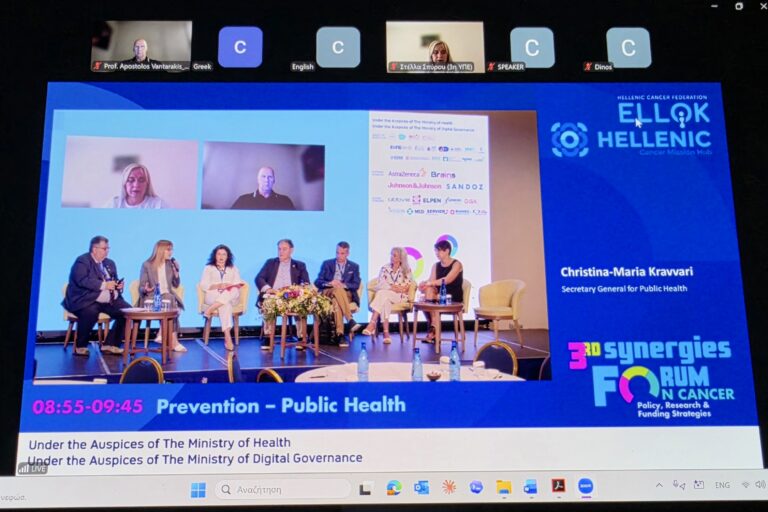
During his presentation at the 3rd Synergies Forum on Cancer Policy, Research & Funding Strategies, held in Athens from 29 June to 1 July 2026, Prof. Apostolos Vantarakis highlighted the pivotal role of Primary Health Care (PHC) in the transition from treatment-oriented care to prevention, emphasising that modern PHC is evolving into a cornerstone of public health by focusing on early risk detection, equitable access, and effectively linking citizens to organised community-based prevention programmes.
Primary Health Care: From Treatment to Prevention
As Prof. Apostolos Vantarakis noted, Primary Health Care is no longer simply the first point of contact with the health system when illness occurs. Instead, it is becoming a proactive mechanism for predicting and preventing disease, leveraging the long-term relationship between family physicians, community nurses, Primary Health Care teams (TOMYs), and citizens. This continuity of care enables the early identification of risk factors for chronic diseases such as diabetes, cardiovascular disease, and cancer through an increasingly organised, digitally supported, and holistic approach that also considers the social determinants of health.
Connecting Citizens with Prevention Programmes
Particular emphasis was placed on the importance of connecting Primary Health Care with community-based prevention programmes. According to Mr. Vantarakis, early risk detection has little value unless it is followed by effective referral, follow-up, and support. The personal and family physician is called upon to act as a “navigator” within the healthcare system, encouraging participation in prevention programmes while ensuring continuity of care, particularly for citizens facing social or geographical barriers to accessing health services.
Greece’s National Prevention Programme: PROLAMVANO
Referring to the current situation in Greece, Mr. Vantarakis described the implementation of the National Prevention Programme “PROLAMVANO” as a historic milestone, marking the country’s first comprehensive and systematic nationwide prevention initiative. The programme includes organized screening for breast cancer, cervical cancer, colorectal cancer, and cardiovascular risk assessment, supported by modern digital infrastructure such as electronic prescribing, the use of the national social security number (AMKA), and electronic invitations sent directly to eligible citizens.
Challenges to Achieving Equitable Participation
Despite this significant progress, he stressed that major challenges remain. Participation rates in prevention programmes continue to fall below national targets, while digital invitation systems alone are insufficient to effectively reach older adults, residents of remote areas, and other vulnerable population groups. Furthermore, shortages and uneven geographical distribution of personal and family physicians, incomplete enrolment in the Personal Physician system, and the longstanding fragmentation between primary and hospital care continue to hinder equitable access to preventive services.
The Contribution of EUCanScreen
At the European level, Mr. Vantarakis highlighted the importance of the EUCanScreen Joint Action, implemented under the EU4Health Programme and Europe’s Beating Cancer Plan. The initiative aims to strengthen quality assurance, governance, and equitable access to cancer screening programmes while promoting the exchange of expertise, methodologies, and best practices among European countries. Greece’s active participation, he noted, offers a valuable opportunity to further enhance national prevention policies and improve the effectiveness of organised screening programmes.
Looking Ahead
Concluding his address, Mr. Vantarakis emphasized that the future success of Primary Health Care will not be measured solely by its ability to treat disease, but increasingly by its capacity to identify health risks early, effectively connect citizens with preventive services, and ensure that no one is left behind. As he underlined, Greece has taken the essential first step; the next—and most critical—challenge is to transform invitations into meaningful and equitable participation through a strong, well-staffed, and fully integrated Primary Health Care system.
Subscribe to our newsletter to get news and updates.
Views and opinions expressed are however those of the author(s) only and do not necessarily reflect those of the European Union or European Health and Digital Executive Agency (HaDEA). Neither the European Union nor HaDEA can be held responsible for them.
This website is managed by 6th DYPEDE, Greece.






This project has received funding from the European Union’s EU4HEALTH Programme under the Grant Agreement no 101162959