CLARA – Cervical Cancer Control through Equitable Access to Quality Services is Romania’s newest national effort to strengthen its cervical cancer screening programme.
Launched in December 2025 and running for 46 months, until October 2029, CLARA is financed under Romania’s Health Programme 2021–2027 and co-financed by the European Social Fund Plus. By the end of the project, Romania aims to expand equal, timely, and non-discriminatory access to safe, patient-centred cervical cancer prevention and treatment services, while laying the foundations for a sustainable, quality-assured national screening programme.
A national coalition for organised screening
CLARA brings together the main institutions and partners involved in cervical cancer screening in Romania. The project is led by the “Carol Davila” University of Medicine and Pharmacy in Bucharest, in partnership with Romania’s National Institute of Public Health, the three Institutes of Oncology in Bucharest, Cluj-Napoca, and Iași, and five regional hospitals in Târgu Mureș, Constanța, Craiova, Timișoara, and Pitești. Two civil-society organisations, the Coalition of Romania’s Chronic Patients’ Organisations (COPAC-RO) and the Romanian Association of Midwives, strengthen the consortium’s capacity to reach communities and support women along the screening pathway.
Together, these twelve institutions are working on several priorities at once: updating the national screening methodology, training around 700 medical and non-medical professionals, consolidating the cervical cancer screening registry, and establishing five new regional prevention centres. Their shared objective is to make screening more coordinated, accessible, and equitable, regardless of where a woman lives or the barriers, she may face in accessing care.
A key element of this work is the National Scientific Board, led by the Romanian Society of Obstetrics and Gynaecology. The Board brings together gynaecologists, public health experts, laboratory and cytology specialists, oncologists, and academic representatives. It has recently completed the updated methodology for Romania’s cervical cancer screening programme through a consensus process.
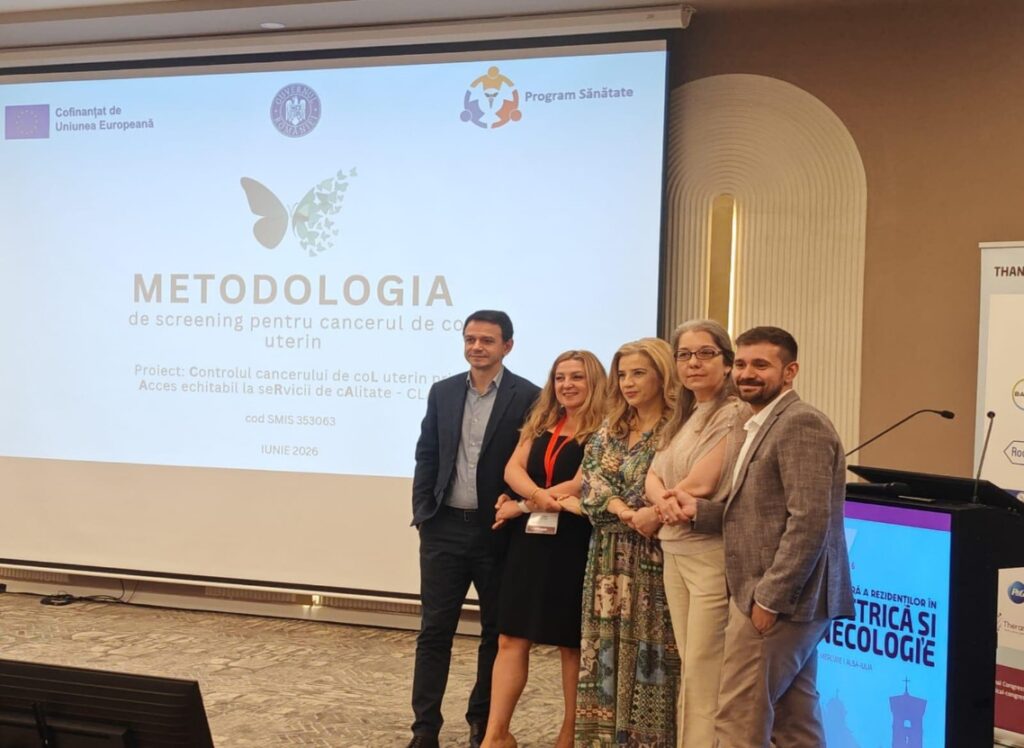
The methodology is aligned with European Commission Initiative on Cervical Cancer and includes a dedicated chapter on governance, drawing on the sustainability assessment tool developed under EUCanScreen Work Package 4. This connection is particularly important for EUCanScreen, whose work supports countries in strengthening governance, quality, monitoring, and sustainability across cancer screening programmes.
The Scientific Board is also supporting the development of a comprehensive screening registry. The registry will collect data across the full screening pathway, from invitations and test results to colposcopy, pathology, and treatment of precancerous lesions. It will also provide many of the indicators required for the Third EU Cancer Screening Report and will be interconnected with the national cancer registry.
In parallel, the Board has developed the training curriculum for the professionals involved in the programme, with 700 healthcare and community-level workers expected to be trained over the next two years.
The courses will employ the knowledge and skills of the Romanian specialists who will be trained through WP 11 of the EUCanScreen Project.
Reaching women who are too often left out
CLARA’s equity ambition is most visible in its outreach component. The project aims to reach more than 217,000 women from vulnerable or socio-economically disadvantaged communities women for whom a screening invitation letter, however carefully designed, is rarely enough. Reaching them requires trusted people from within or close to the community, communicating in ways that are familiar, respectful, and accessible.
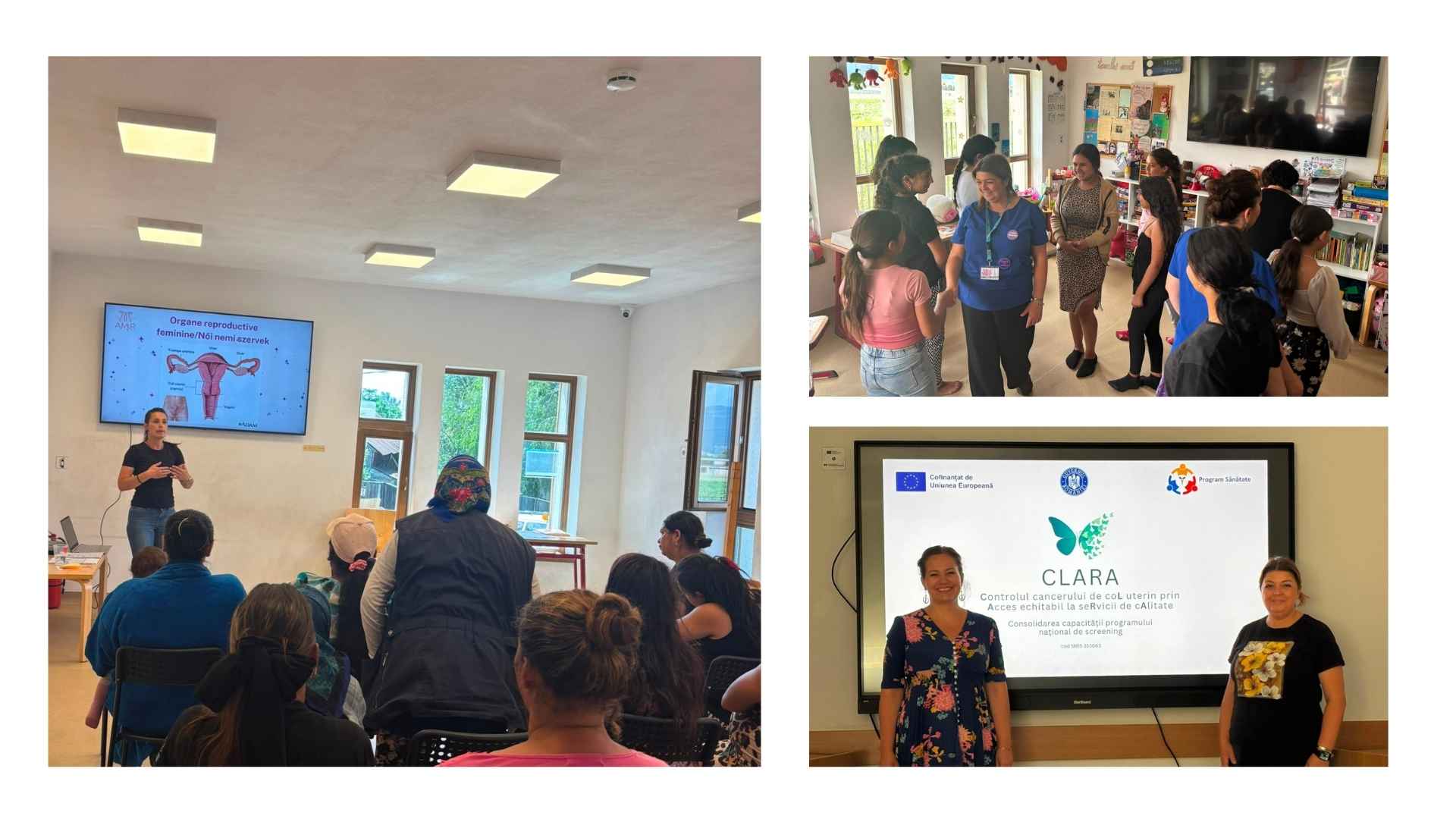
The Romanian Association of Midwives plays a central role in this outreach. The midwives go directly into communities, delivering face-to-face education sessions in local centres and rural settlements on female reproductive health, HPV infection, HPV vaccination, cervical cancer screening, and children’s immunisation. Sessions are delivered in culturally appropriate language and, where needed, in Romanian, Hungarian, and other ethnic minorities languages, helping ensure that information is not only provided but understood.
This work builds the health literacy and trust that must exist before women who have limited contact with the health system can feel confident coming forward for screening. Midwives are particularly well placed to support this process, drawing on three decades of professional association work and long-standing engagement with vulnerable and underserved women across Romania.
From community conversations to screening pathways
CLARA does not stop at information. Women reached through community activities will receive long-term support, case management, and guidance in accessing healthcare services available within the project. From prevention and screening to medical follow-up, the initiative aims to create a continuous pathway of care adapted to the realities of each community. In doing so, Romania’s cervical cancer screening efforts reflect EUCanScreen’s broader mission: to support sustainable, high-quality, and equitable cancer screening across Europe.
By 2029, CLARA aims to leave behind more than increased screening participation. Its longer-term contribution will be a stronger national screening system, better data, trained professionals, regional prevention capacity, and community partnerships capable of continuing to reach women who need these services most.
CLARA’s nationwide partnership, built on strong clinical and academic infrastructure paired with genuine, community-level trust-building is now matched by a close collaboration with EUCanScreen. For Romania, a country that has long carried one of Europe’s highest cervical cancer burdens, this convergence could not have come at a better time, it is exactly what allows a national screening programme to be built the way it will last, steadily and surely.
Views and opinions expressed are however those of the author(s) only and do not necessarily reflect those of the European Union or European Health and Digital Executive Agency (HaDEA). Neither the European Union nor HaDEA can be held responsible for them.
This website is managed by 6th DYPEDE, Greece.