New Recommendations for Cervical Cancer Screening
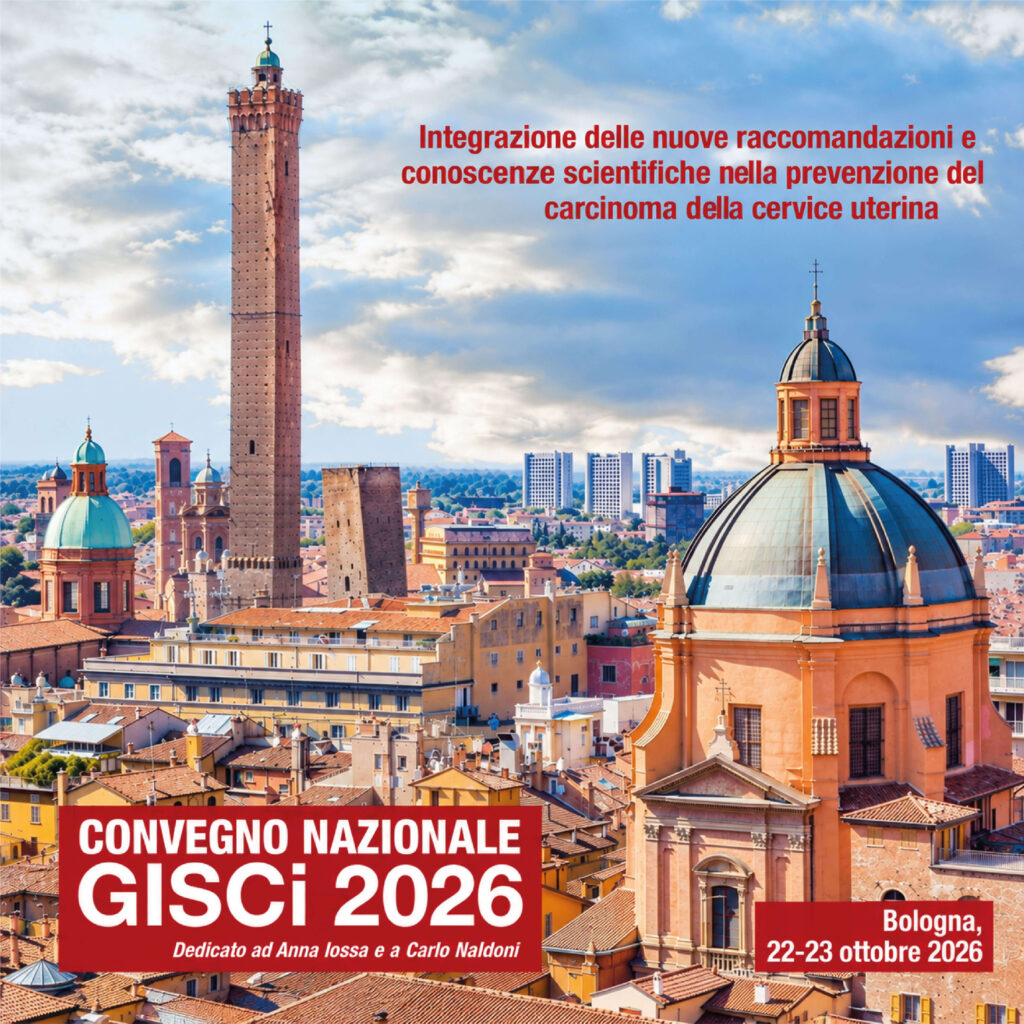
National Conference of GISCi (Italian Cervical Cancer Screening Group)

On 22–23 October 2026, Bologna hosts the National Conference of GISCi (Italian Cervical Cancer Screening Group), dedicated to integrating new scientific evidence and recommendations into cervical cancer prevention.
The event brings together screening professionals, researchers and healthcare experts to discuss developments in organised cervical cancer screening, from updated prevention strategies to diagnostic pathways and the challenges of implementing new recommendations.
From European recommendations to personalised screening
The conference opens on 22 October with a joint workshop involving GISCi, the National Centre for Screening Monitoring (ONS) and the Federation of Cancer Screening Associations (FASO), entitled “New Guidelines and Recommendations: From Theory to Practice”.
The workshop examines updated European and national recommendations, with particular attention to their implementation in Italy and the role of regional health systems.
Among the scientific topics are the comparison between primary HPV testing and cytology in unvaccinated women aged 25–29, the implementation of later screening initiation among HPV-vaccinated women, and the use of biomarkers in HPV-based screening pathways.
As Annarosa Del Mistro, President of GISCi, explains in an interview published ahead of the conference, screening protocols are evolving to take greater account of individual risk factors, including HPV vaccination status.
In Italy, the first screening invitation has already been postponed from age 25 to 30 for women vaccinated against HPV under the relevant programme criteria. Another area of development concerns the use of biomarkers following a positive HPV test. By helping distinguish different levels of risk, these tools may support more targeted diagnostic assessment and follow-up, avoiding the same intensity of monitoring for women with different risk profiles.
Equity, programme quality and informed participation
The conference also addresses Italy’s National Prevention Plan 2026–2031 and progress in implementing the National Health Equity Programme 2021–2029, particularly in southern regions.
Accessibility is a central concern, with dedicated sessions examining the barriers faced by people with disabilities and transgender populations in accessing organised screening programmes.
Programme quality is another important focus. Through the annual GISCi survey, experts review participation, testing results, diagnostic follow-up and treatment, identifying areas for improvement across the screening pathway.
On 23 October, scientific sessions explore laboratory testing, the management of cervical lesions, HPV genotyping and developments in diagnostic and therapeutic approaches.
Beyond clinical and organisational developments, the conference addresses the role of awareness and health literacy in cervical cancer prevention.
In her interview, Del Mistro emphasises the importance of helping women navigate the information available, identify reliable scientific sources and understand the value of participating in organised screening programmes.
As recommendations evolve, explaining the reasons behind changes in screening protocols becomes increasingly important. Organised screening is not simply an individual test, but a structured pathway that begins with an invitation and includes appropriate diagnostic assessment, follow-up and continuous quality monitoring.
Turning scientific evidence into better screening, for everyone
This project is co-funded by the European Union

Subscribe to our newsletter to get news and updates.
Views and opinions expressed are however those of the author(s) only and do not necessarily reflect those of the European Union or European Health and Digital Executive Agency (HaDEA). Neither the European Union nor HaDEA can be held responsible for them.
This website is managed by 6th DYPEDE, Greece.






This project has received funding from the European Union’s EU4HEALTH Programme under the Grant Agreement no 101162959