The Local Health Authority (AST) of Macerata, in Italy’s Marche Region, is preparing a pilot project to integrate Helicobacter pylori testing into the existing colorectal cancer screening programme.
Developed within EUCanScreen’s Work Package 8, the initiative responds to a specific local health challenge: the relatively high incidence of gastric cancer in the Province of Macerata.
Helicobacter pylori infection is widely recognised as the main cause of gastric cancer. Detecting and treating the infection can play an important role in prevention, making its integration into established screening programmes a promising approach.
Two tests within a coordinated screening pathway
The initiative is part of a wider EUCanScreen pilot involving five European countries: Estonia, Italy, Latvia, Portugal and Lithuania. The project will investigate a co-screening model that combines colorectal cancer screening with Helicobacter pylori testing, targeting population groups with largely overlapping age ranges.
In Macerata, approximately 1.000 people invited to participate in colorectal cancer screening are expected to be involved.
Alongside the standard invitation for the faecal immunochemical test (FIT), used to detect hidden blood in stool samples, eligible individuals will also be offered a stool antigen test (HPsAg) for Helicobacter pylori.
Those who accept will attend the AST Macerata screening centre to provide informed consent and receive sample collection kits. Samples will then be analysed at the hospital laboratory.
Participation will be voluntary. Individuals who decline will continue to follow the standard colorectal cancer screening pathway, collecting and returning their FIT kits through local pharmacies and designated collection points.
From testing to follow-up care
Participants who test positive for Helicobacter pylori will be referred for a gastroenterology consultation, where eradication therapy will be prescribed and individual and family risk factors assessed.
Further diagnostic investigations, including endoscopic examinations, may be recommended based on the findings.
This pathway connects early identification of the infection with appropriate clinical assessment and treatment.
Evaluating an integrated approach to prevention
Rather than introducing a separate screening programme, the Macerata pilot builds on an established invitation system to offer an additional preventive intervention.
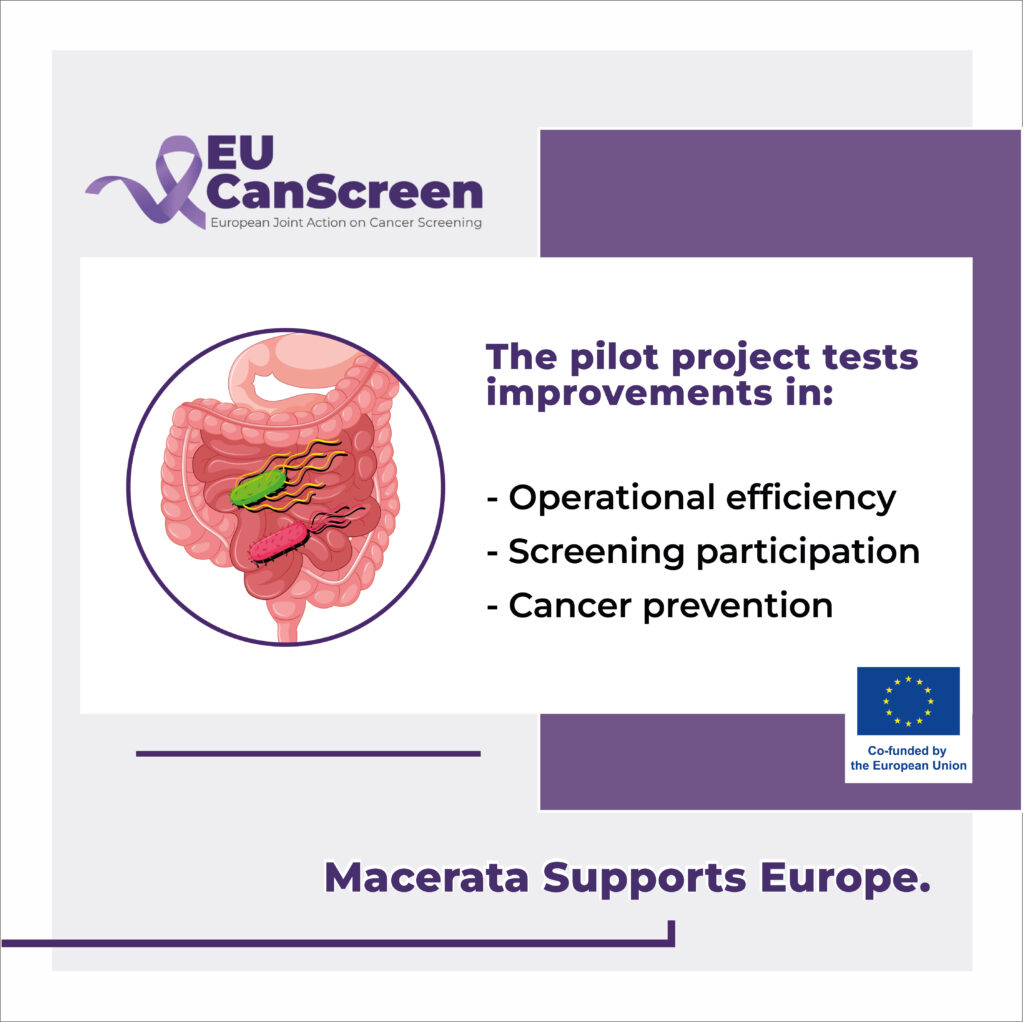
The model could improve organisational efficiency, encourage screening participation and expand opportunities for gastric cancer prevention. The pilot will help determine its feasibility and potential value for healthcare services and participating citizens.
The findings will also contribute to EUCanScreen’s efforts to strengthen the effectiveness, equity and sustainability of cancer screening programmes, providing evidence that could inform similar approaches in other European settings.
Macerata supports Europe!