Start here
Overview film
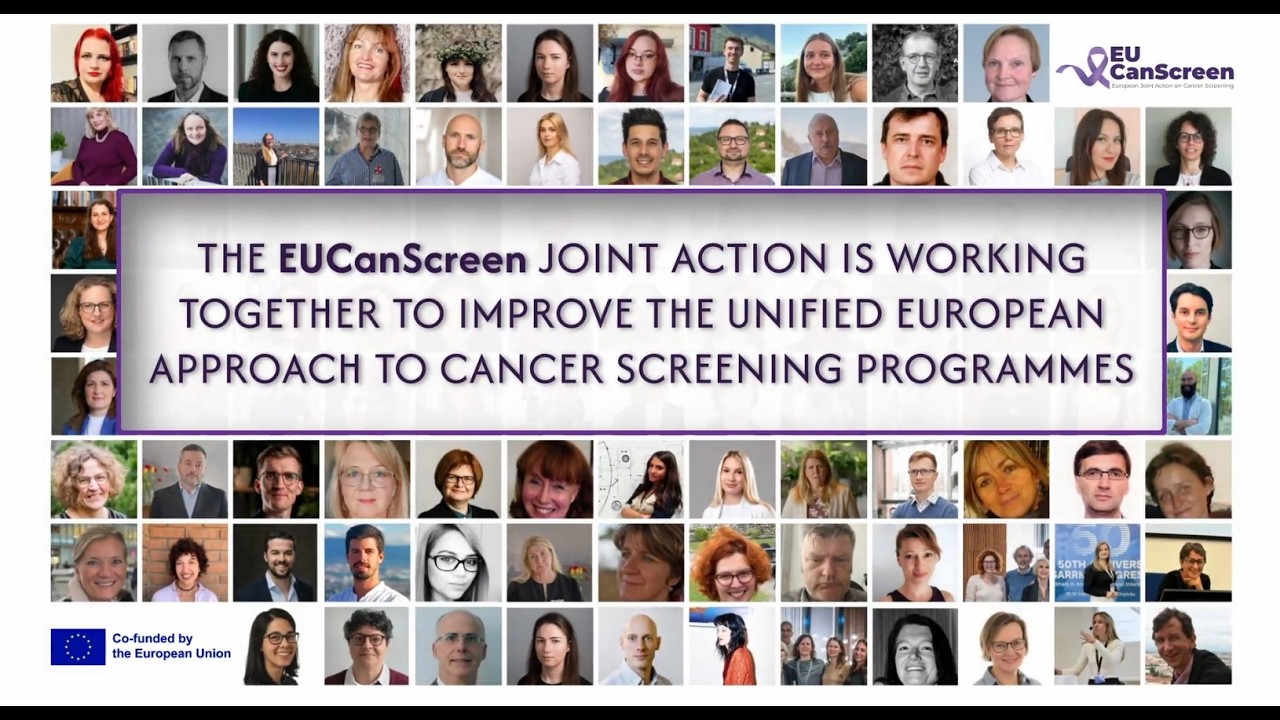
Shaping the Future of Cancer Screening Across Europe
How do you build a unified European approach to cancer screening? In this short film, seven EUCanScreen experts look at the critical points and what is being done to overcome them: bringing expert centres together with the countries that need support, strengthening governance, robust monitoring, evidence-based resources, harmonised data standards, high-quality colonoscopy and practical tools for sustainable programmes.
- Featuring: Marcis Leja · Andre Carvalho · Carlo Senore · Mari Nygard · Tytti Sarkeala · Jaroslaw Regula · Urska Ivanus
The interviews
7 experts
Building Smarter Cancer Screening Systems for the Future
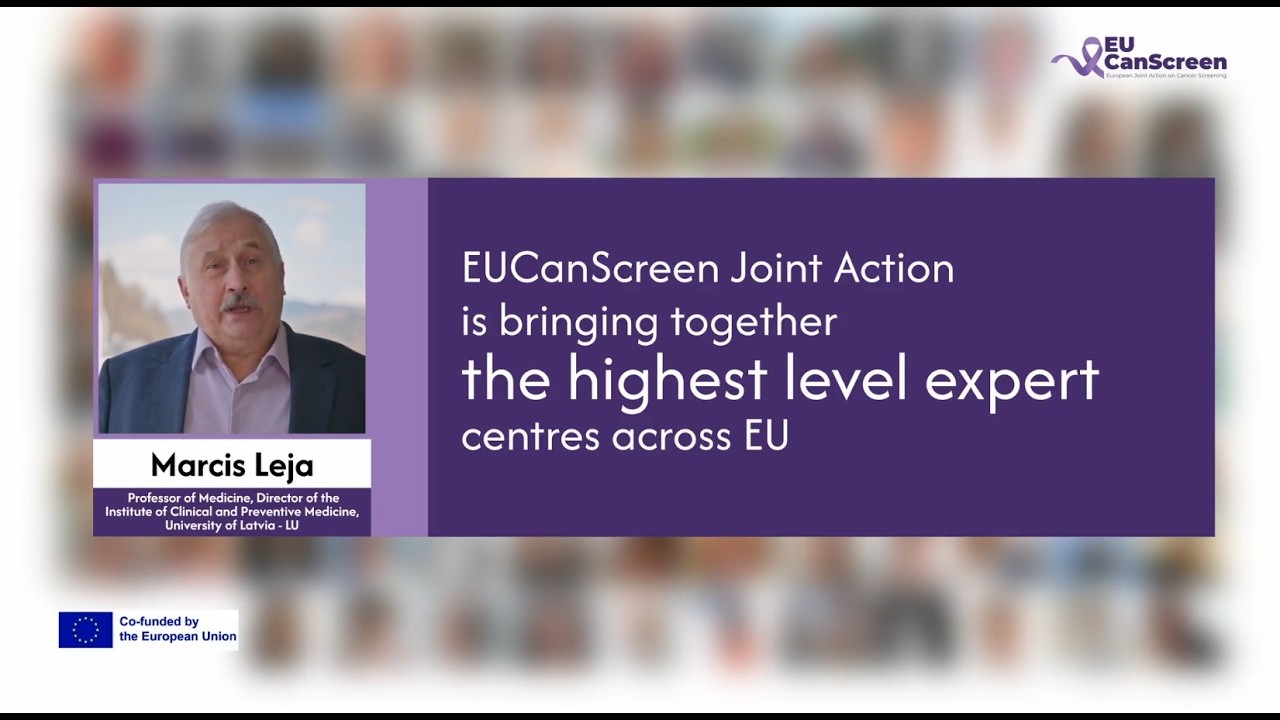
Marcis Leja
Professor of Medicine, Director of the Institute of Clinical and Preventive Medicine, University of Latvia (LU)
EUCanScreen brings Europe's leading expert centres together with countries that need support to build or strengthen their screening systems. Marcis Leja explains how the Joint Action meets each country where it is: helping established programmes prepare for personalised screening, new tests and AI-based technologies; transferring knowledge through the target and supportive country mechanism; and helping countries without population-based programmes to start or restart them. He also highlights the Governmental Advisory Board, which brings national decision-makers to the table.
Question in this interview
- What is the main contribution of your work/activities within EUCanScreen to improving cancer screening in Europe?
Stronger Leadership, Better Cancer Screening
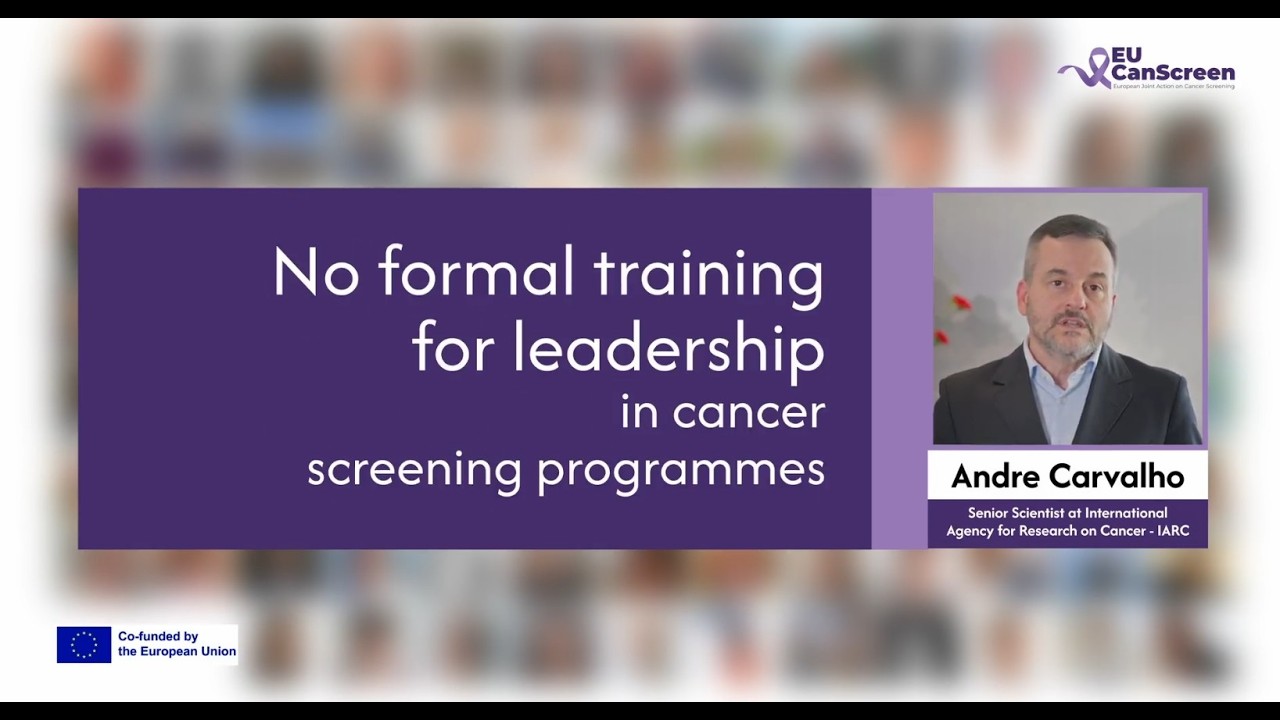
Andre Carvalho
Senior Scientist, International Agency for Research on Cancer (IARC)
Ineffective governance limits the full potential of cancer screening programmes in most Member States, and there is no formal leadership training for cancer screening as there is for public health more broadly. Andre Carvalho explains how EUCanScreen is developing frameworks that define the roles and responsibilities of effective governance, set out the competences a screening leader needs and how to build them, and evaluate sustainability, so that programmes can identify their bottlenecks and overcome them.
Questions in this interview
- Which concrete problem in cancer screening does your work/activities address, and why is this problem particularly important for Member States today?
- What is the main contribution of your work/activities within EUCanScreen to improving cancer screening in Europe?
The Right Cancer Screening for the Right Person
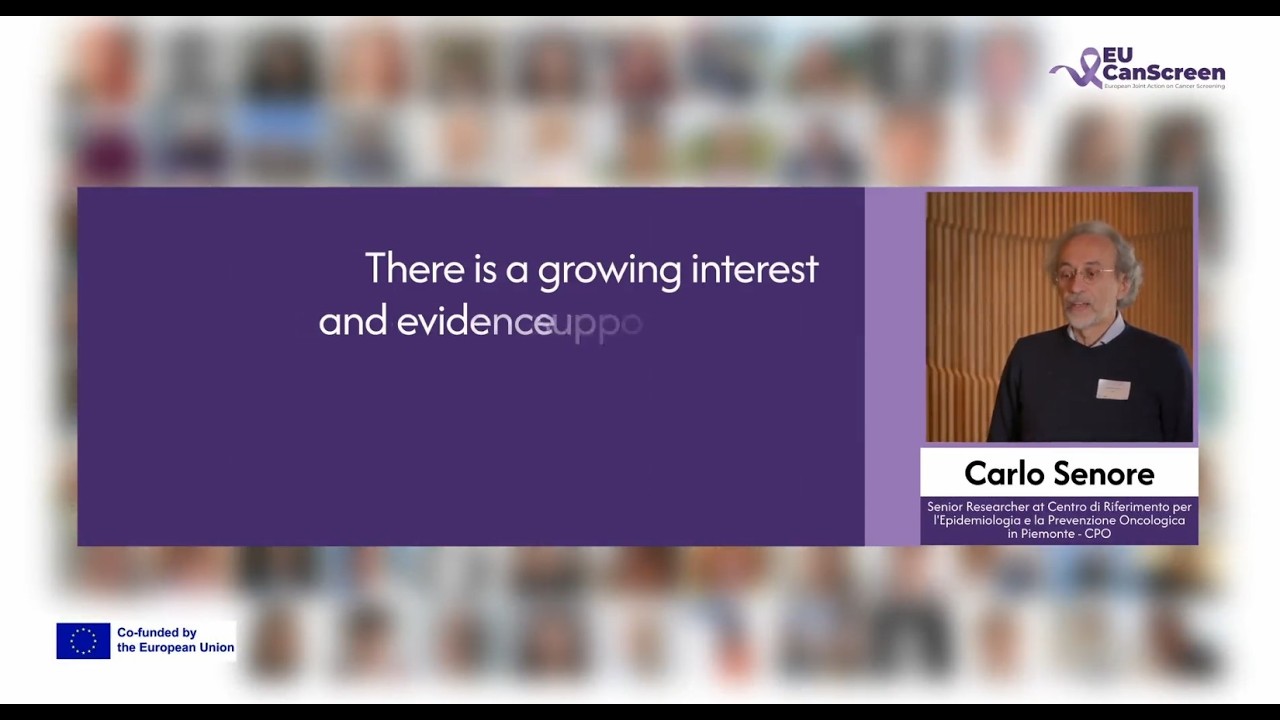
Carlo Senore
Senior Researcher, Centro di Riferimento per l'Epidemiologia e la Prevenzione Oncologica in Piemonte (CPO)
Not everyone faces the same risk of colorectal cancer. Carlo Senore explains how EUCanScreen is defining a framework for risk-stratified screening: maximising the benefit for people at higher risk, and de-intensifying screening for those at lower risk to reduce harms. He also shows why integrated IT systems and reliable performance data are essential for coverage and quality, and how CPO and Erasmus MC are developing a prioritisation framework for transparent, evidence-based decisions on introducing or adapting screening programmes.
Questions in this interview
- Which result of your work/activities within EUCanScreen do you consider particularly promising or significant?
- How do your work/activities support equity, quality, or access in cancer screening across different populations or regions in Europe?
- How do your work/activities contribute to the long-term sustainability and scale-up of cancer screening initiatives beyond the lifetime of EUCanScreen?
Making Cancer Screening Reach Everyone
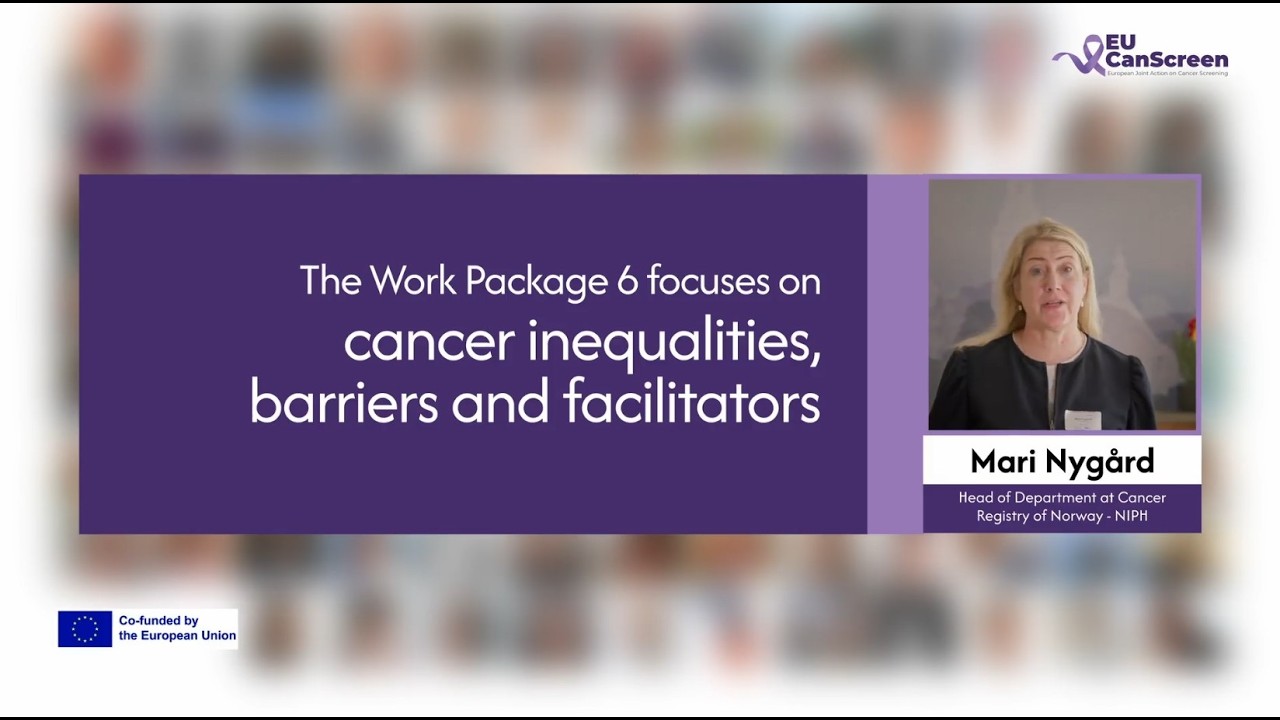
Mari Nygard
Head of Department, Cancer Registry of Norway, Norwegian Institute of Public Health (NIPH)
Cervical cancer is fully preventable, yet it still claims thousands of lives in Europe every year. Mari Nygard, who leads Work Package 6, explains how 26 countries are working together to understand the barriers to screening at system and individual level, with a focus on people with a migrant background, people with intellectual disabilities and gender minorities. She presents the Turin Memorandum, signed by 28 experts from 13 countries, and the upcoming interactive toolkit and AI-based tool that will help screening providers across Europe improve participation.
Questions in this interview
- What challenge in cancer screening does your work/activities address, and why is it important for Europe right now?
- What is the main contribution of your work/activities within EUCanScreen to improving cancer screening in Europe?
- What has been the most significant achievement of your work/activities so far, in measurable or tangible terms?
- What are the key outputs or tools developed within your work/activities in EUCanScreen that stakeholders should be aware of?
Turning Better Data into Better Cancer Screening
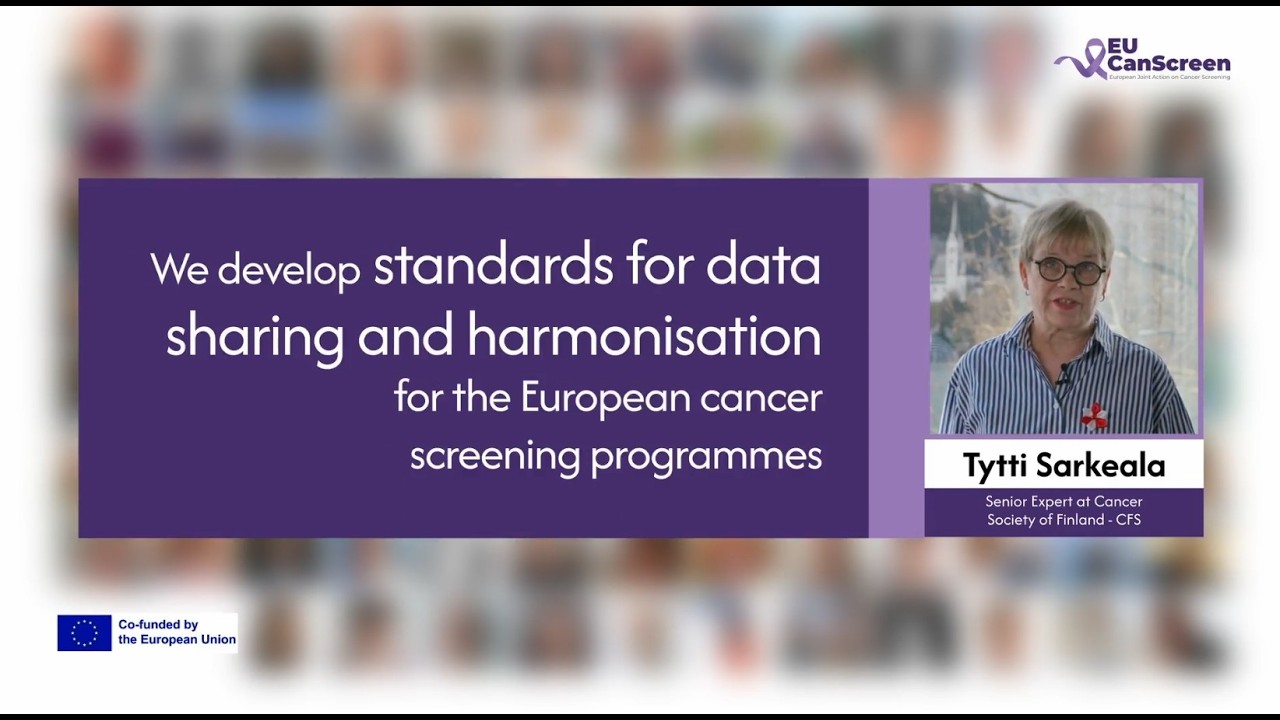
Tytti Sarkeala
Senior Expert, Cancer Society of Finland (CSF)
Reliable, comparable data is the foundation of effective cancer screening. Tytti Sarkeala explains how EUCanScreen is developing standards for data sharing and harmonisation, and tools for common indicators across European cancer screening programmes. She describes a survey of the European screening data landscape that supports Member States towards the Third Cancer Screening Report, data models compatible with the future European Health Data Space, and open-source tools that enable compatible reporting and cross-border research.
Questions in this interview
- What is the main contribution of your work/activities within EUCanScreen to improving cancer screening in Europe?
- What are the key outputs or tools developed within your work/activities in EUCanScreen that stakeholders should be aware of?
- In what ways do your work/activities promote cooperation and knowledge exchange between Member States and stakeholders?
Training the Trainers Who Raise the Bar on Cancer Screening
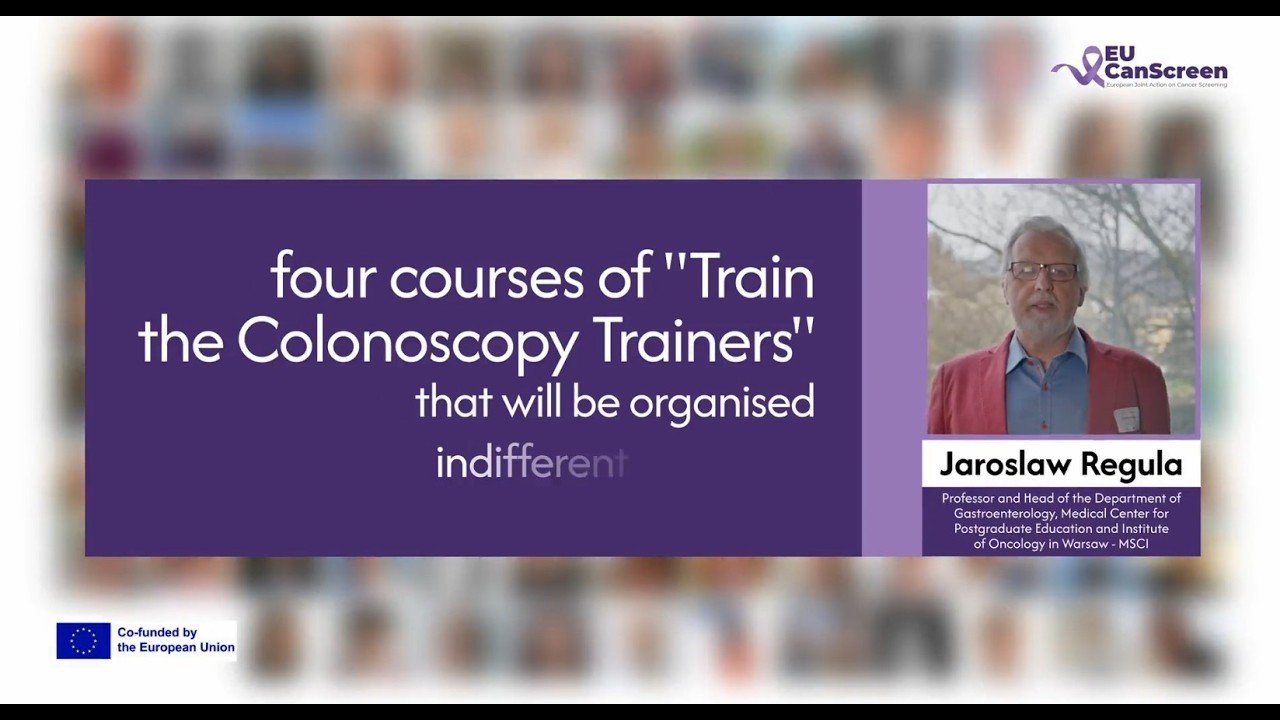
Jaroslaw Regula
Professor and Head of the Department of Gastroenterology, Medical Center for Postgraduate Education and Institute of Oncology in Warsaw (MSCI)
High-quality colonoscopy is essential to every colorectal cancer screening programme, including those based on FIT. Yet most colonoscopists learned from colleagues, without a method for teaching others. Jaroslaw Regula introduces the EUCanScreen ‘Train the Colonoscopy Trainers’ courses in Norway, Latvia, Poland and Italy. The methodology was first developed in the United Kingdom, and a randomised controlled trial in Poland showed that a two-day course improved the detection of precancerous lesions for at least two years.
Question in this interview
- What is the main contribution of your work/activities within EUCanScreen to improving cancer screening in Europe?
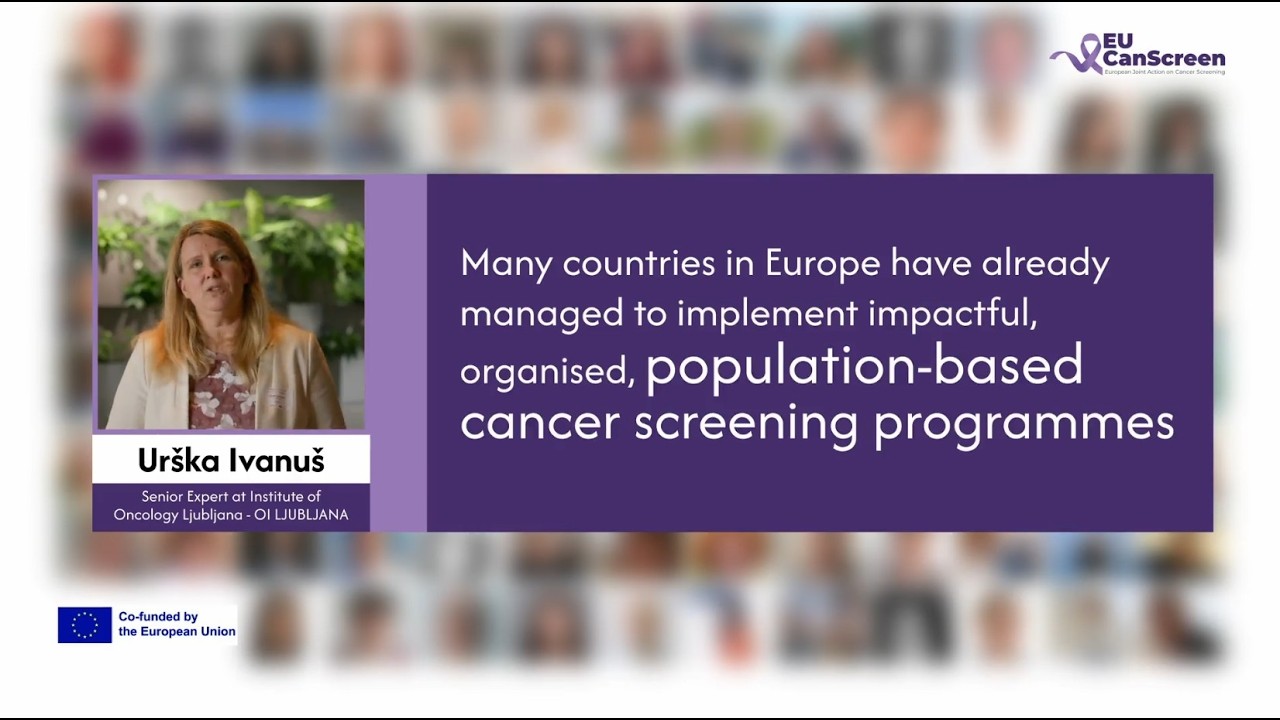
From Plans to Action: Making Cancer Screening Work
Urska Ivanus
Senior Expert, Institute of Oncology Ljubljana (OI Ljubljana)
Many European countries already run impactful, organised, population-based cancer screening programmes, but others still struggle to make theirs sustainable. Urska Ivanus, who leads Work Package 4, explains how EUCanScreen is developing knowledge, tools, frameworks and guidelines for sustainable implementation; running the Targeted Support Mechanism, through which countries help each other; and training a new generation of leaders in cancer screening on a leadership competence framework that the project is developing.
Question in this interview
- What is the main contribution of your work/activities within EUCanScreen to improving cancer screening in Europe?
Watch, share and help us spread the word about better cancer screening across Europe. 💜
Follow EUCanScreen on social media for new videos and updates. #EUCanScreen
Views and opinions expressed are however those of the author(s) only and do not necessarily reflect those of the European Union or European Health and Digital Executive Agency (HaDEA). Neither the European Union nor HaDEA can be held responsible for them.
This website is managed by 6th DYPEDE, Greece.