
Improving Cancer Screening Access Through The National Programme For Health Equity
How Italy's PNES is reaching people who are missed by organised cancer screening
Reducing Inequalities
Reducing inequalities in cancer prevention also means ensuring that organised screening programmes are accessible to people who may face geographical, organisational or socio-cultural barriers to participation.
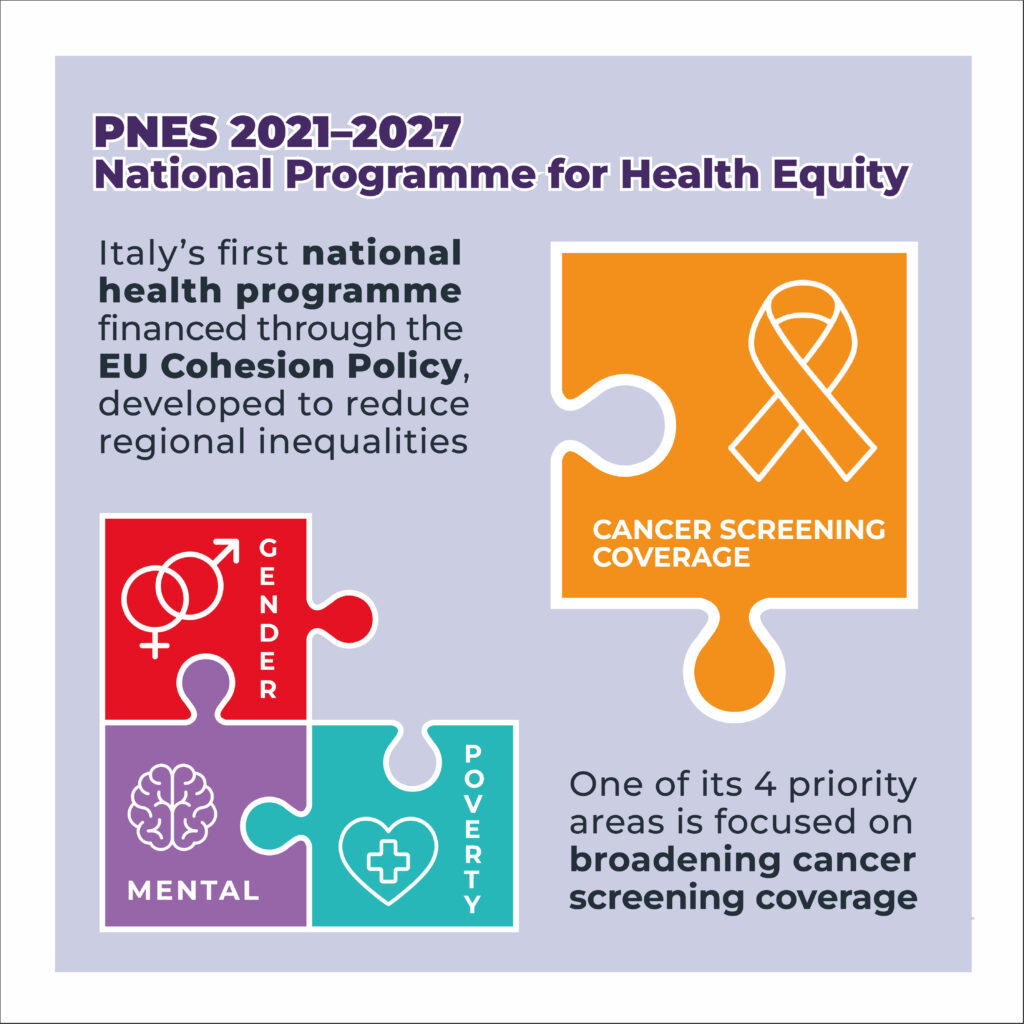
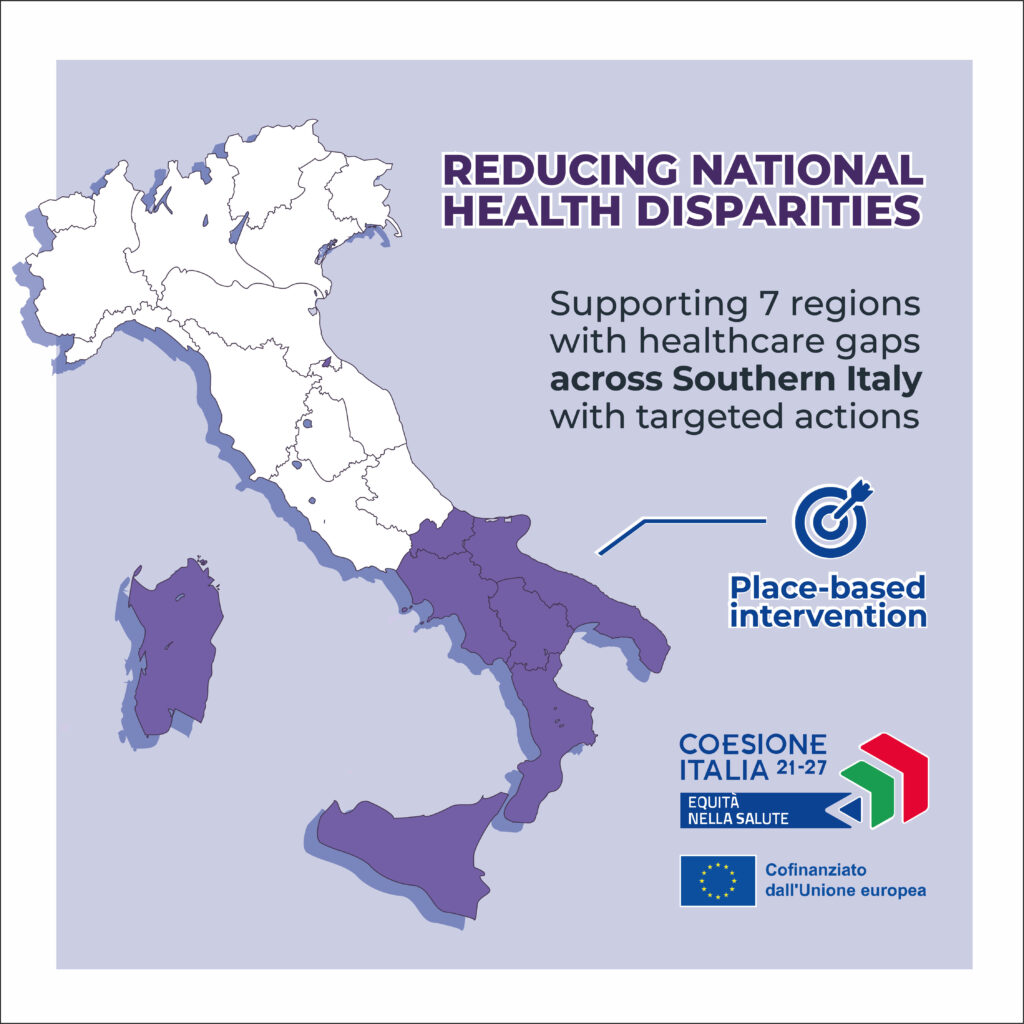
In Italy, the National Programme for Health Equity (PNES) 2021–2027 is the first national health programme funded through EU Cohesion Policy. It operates in Basilicata, Calabria, Campania, Molise, Puglia, Sardinia and Sicily, seven regions where health services face greater organisational and financial challenges and where the achievement of the standards defined by the Essential Levels of Care is lower than in other parts of the country.
Make Access to Healthcare More Equitable
The programme aims to strengthen health services and make access to healthcare more equitable, with particular attention to people in socio-economically vulnerable conditions.
PNES works across four priority areas:
- health poverty
- mental health
- gender-sensitive healthcare
- increasing cancer screening coverage
Breast, Cervical and Colorectal Cancer
One of these areas is specifically dedicated to increasing cancer screening coverage. It focuses on the three organised screening programmes for breast, cervical and colorectal cancer and aims to improve their effectiveness and efficiency while increasing participation.
Particular attention is given to people in socio-economically vulnerable conditions and to those living in remote or disadvantaged areas, as well as to people who are missed by screening invitations or who receive an invitation but do not participate.
Several factors can contribute to non-participation, including limited familiarity with preventive healthcare initiatives, socio-cultural barriers, distance from screening centres and difficulties with transport connections.
To address these barriers, PNES supports the expansion of screening points, the development and modelling of new screening and diagnostic care pathways, more effective communication, staff training and the improvement of screening service organisation. It also promotes the continuous integration and updating of invitation lists.
A key element of this approach is cooperation between healthcare and administrative staff of local health authorities, municipal social services and non-profit and civil society organisations, with the aim of identifying methods and tools that can help reach people who currently participate less in organised screening programmes.
Seven Regions
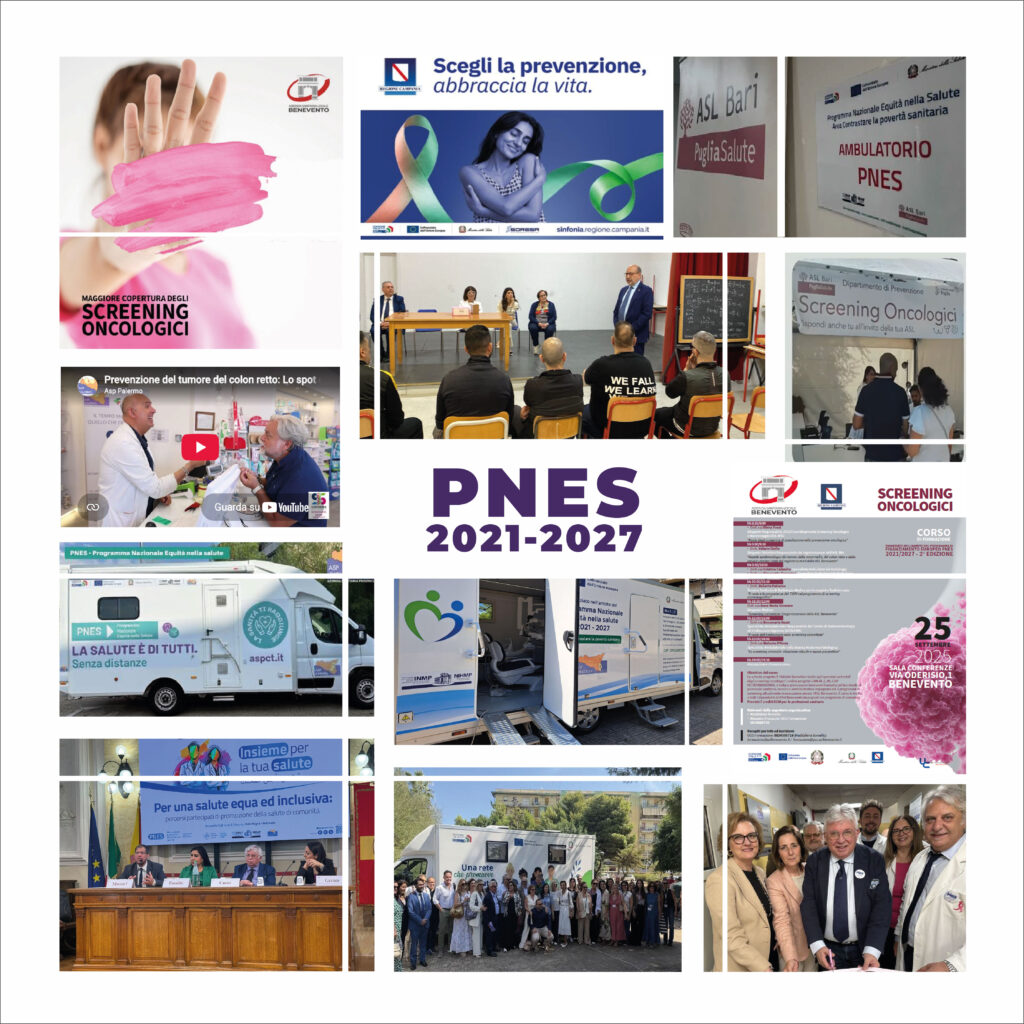
Across the seven regions, these measures are being translated into concrete actions, including mobile screening units and motorhomes, new or upgraded screening facilities, territorial outreach activities and targeted initiatives for populations facing greater barriers to prevention.
In Basilicata, for example, cancer prevention activities have been carried out in the Melfi prison, including the distribution of colorectal cancer screening kits to eligible detainees. In Sicily, PNES has supported the development of new screening services in Messina and Palermo, strengthening local access to cancer prevention.
Through these interventions, PNES works to strengthen organised cancer screening programmes and make them more accessible to people who are currently less likely to participate in prevention pathways.
Further information
National Programme for Health Equity
https://www.pnes.salute.gov.it/
PNES priority areas
https://www.pnes.salute.gov.it/it/tema/programma-nazionale-equita-nella-salute/aree-di-intervento/
Increasing cancer screening coverage
https://www.pnes.salute.gov.it/it/tema/programma-nazionale-equita-nella-salute/maggiore-copertura-degli-screening-oncologici/
——–
EUCanScreen is Co-funded by the European Union.
Subscribe to our newsletter to get news and updates.

Views and opinions expressed are however those of the author(s) only and do not necessarily reflect those of the European Union or European Health and Digital Executive Agency (HaDEA). Neither the European Union nor HaDEA can be held responsible for them.
This website is managed by 6th DYPEDE, Greece.






This project has received funding from the European Union’s EU4HEALTH Programme under the Grant Agreement no 101162959