A Social Report helps make an organisation’s activities, results and use of resources transparent and understandable, allowing citizens and other stakeholders to assess its contribution to the community.
Within EUCanScreen, the Italian Competent Authority is developing a Social Report to communicate the Joint Action’s work and expected impact, while encouraging dialogue with those involved in and affected by its activities.
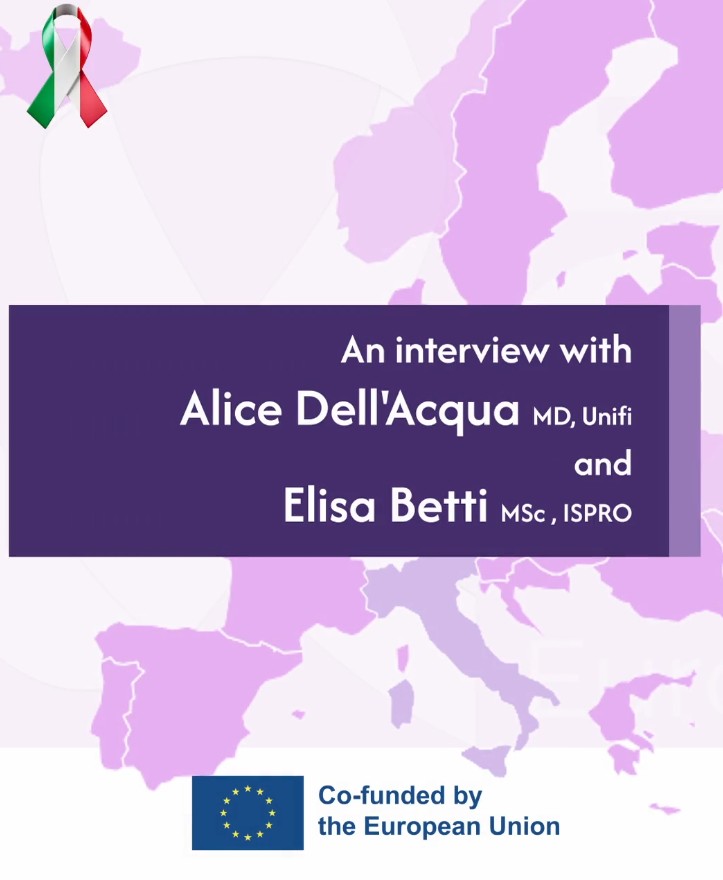
In this video interview, Alice Dell’Acqua (University of Florence – UniFI) and Elisa Betti (Institute for Cancer Research, Prevention and Clinical Network – ISPRO) discuss the role of social reporting in public health initiatives and how this approach is being applied within EUCanScreen.
A Social Report documents an organisation’s or project’s decisions, activities, achievements and use of resources over a defined period. It enables citizens, healthcare professionals and public authorities to understand how an initiative fulfils its objectives and what effects its activities may have.
Transparency and accountability are central to this process. The information collected can also support management and decision-making by helping organisations evaluate progress, identify areas for improvement and define future priorities.
Social reporting therefore serves both an external and an internal purpose: providing information to the wider community while supporting organisational assessment and strategic planning.
An important dimension of social reporting is the involvement of stakeholders in identifying and assessing the effects of an initiative.
Their perspectives can help determine which impacts are most relevant to the community and contribute to more informed decisions and strategies.
This involvement goes beyond communicating results. It creates opportunities for dialogue throughout the reporting process, allowing different perspectives to inform the development of the document itself.
The Italian Competent Authority is applying these principles to the preparation of EUCanScreen’s Social Report, with the aim of explaining the Joint Action’s activities and their relevance to the community.
A dedicated stakeholder board has been established to contribute to defining the report’s content and structure, creating a space for dialogue during its development.
Particular attention is being given to the clarity and accessibility of the document. By using straightforward language, the report aims to reach a broad audience and make EUCanScreen’s work and expected impact easier to understand.
Making results understandable is an essential part of making them meaningful.
Views and opinions expressed are however those of the author(s) only and do not necessarily reflect those of the European Union or European Health and Digital Executive Agency (HaDEA). Neither the European Union nor HaDEA can be held responsible for them.
This website is managed by 6th DYPEDE, Greece.