
7 October 2026
European and Taiwanese Experts Meet in Riga to Discuss Advances in Cancer Screening
Experts from Europe and Taiwan exchanged experience on quality, personalised and risk-based cancer screening
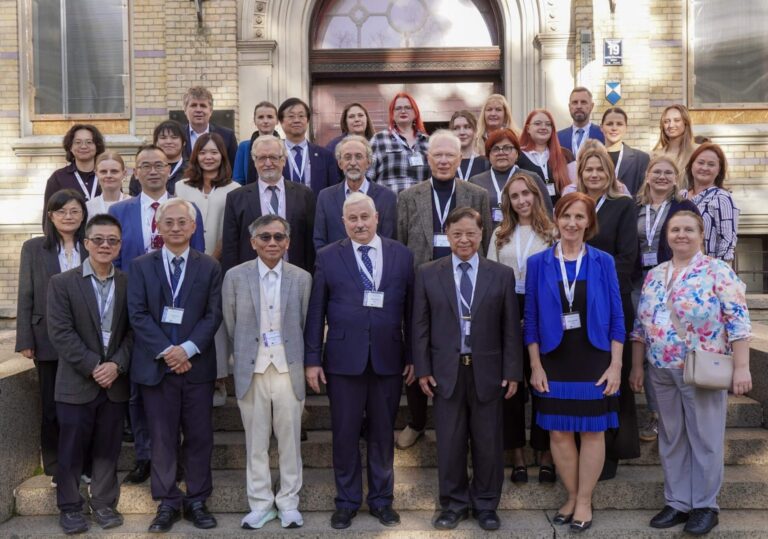
Bringing Together Experts from Europe and Taiwan
On 7 October, the University of Latvia hosted the European–Taiwan Cancer Screening Conference, bringing together experts from Europe and Taiwan to exchange knowledge and discuss more effective, higher-quality and increasingly personalised approaches to cancer screening.
The conference was organised as part of the Joint Action EUCanScreen. It focused on topics such as improving the quality of cancer screening, advancing personalised and risk-based screening, and sharing experience in the early detection of prostate, lung and gastric cancers. The conference was opened by Latvia’s Minister of Health, Hosams Abu Meri, and brought together specialists from Taiwan, Latvia, Italy, the Netherlands, Finland, Lithuania, Germany, Hungary and Poland.
Large-scale Primary Prevention
Taiwan is internationally recognised for its screening programmes for cancer and other major diseases, as well as for landmark research in screening that has proved almost impossible to replicate elsewhere in the world. Notable examples include large-scale primary prevention of stomach cancer on Matsu Island and a study combining colorectal cancer screening with measures to reduce the risk of gastric cancer. Drawing on this internationally recognised experience, European experts are currently exploring opportunities to implement interventions of a similar design in Europe through EUCanScreen. Taiwanese experts also play a leading international role in implementing personalised screening. The opportunity for mutual exchange of knowledge and experience was therefore a key consideration in planning and organising the conference.
FIT
During the conference Taiwanese experts presented their country’s experience in implementing cancer screening and prevention programmes, including more than 20 years of experience in organised colorectal cancer screening using the faecal immunochemical test (FIT). They also highlighted achievements in gastric cancer prevention through the detection and treatment of H. pylori infection, as well as reductions in liver cancer incidence through hepatitis B vaccination. In addition, Taiwanese experts shared recent research on the use of artificial intelligence, data analytics and digital twin technologies to assess individual cancer risk more accurately and tailor screening strategies to different population groups.
Risk-based Screening Approaches
European experts presented initiatives aimed at improving the quality of cancer screening programmes and advancing research across Europe, with particular attention to lung, prostate, gastric and colorectal cancer screening. They also discussed research into risk-based screening approaches that would allow screening measures to be more closely tailored to the cancer risk of different population groups. An interactive tool currently being developed within EUCanScreen was also presented. The tool will help decision-makers set priorities for the introduction and expansion of cancer screening programmes by comparing the potential benefits, risks, cost-effectiveness and sustainability of different strategies. The importance of large and diverse datasets was also emphasised, alongside the need to improve data standardisation and its use in international research to strengthen the scientific evidence base and support the development of personalised cancer screening – one of the EUCanScreen project’s key areas of work.
Professor Marcis Leja
“The experience of Taiwanese researchers in cancer screening enables us to look at challenges in this field from a different perspective, compare different approaches and assess which solutions could be adapted in Europe. This exchange of knowledge and good practice is extremely valuable in making screening programmes increasingly effective and ensuring they reach more people,” said Professor Marcis Leja, Scientific Lead of the EUCanScreen project.
Exchanging Experiences
The exchange of experience between European and Taiwanese experts continued on 8 October at the Precision Medicine Networking Forum (PMNET Forum), where two thematic sessions were organised in collaboration with EUCanScreen. During these sessions, experts continued discussions on improving cancer screening and prevention, while also addressing the development of data-sharing platforms and their contribution to personalised cancer screening.
Conference materials, including presentations and video recordings, are available to all interested parties on the project website: https://eucanscreen.eu/2026/10/11/european-taiwan-cancer-screening-conference-2026-presentations-recordings-photos/
Subscribe to our newsletter to get news and updates.

Views and opinions expressed are however those of the author(s) only and do not necessarily reflect those of the European Union or European Health and Digital Executive Agency (HaDEA). Neither the European Union nor HaDEA can be held responsible for them.
This website is managed by 6th DYPEDE, Greece.






This project has received funding from the European Union’s EU4HEALTH Programme under the Grant Agreement no 101162959